- startup
- tech stack
- mvp
- engineering
How to Choose a Tech Stack for Your Startup
A practical guide to choosing a tech stack for early-stage startups: from business needs and team skills to cost, scalability, and recommended stacks for an MVP.
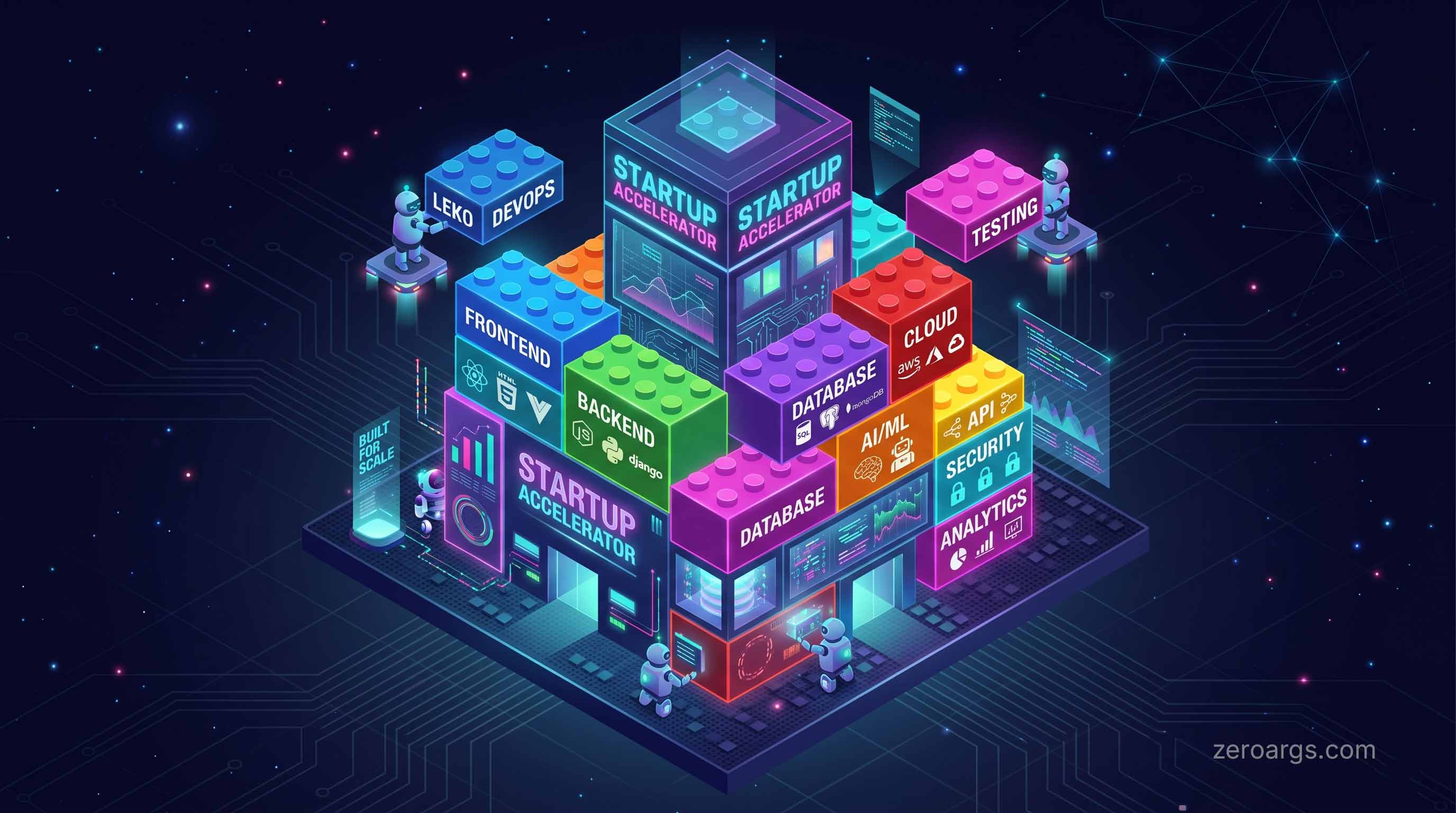
Choosing a tech stack is one of the most consequential decisions an early-stage startup will make. It shapes how fast you can ship features, how much it costs to operate, how easy it is to hire, and whether the product can grow when users start arriving. Unfortunately, many founders pick technology because it is trending on social media rather than because it fits the business.
This article distills the framework we use when helping early-stage startups in Indonesia choose their stack — a process focused on real trade-offs, not the hype cycle.
1. Start From Product Goals and Business Needs
Before naming any framework or language, get clear on the fundamentals:
- Are you building an MVP to validate an idea, or scaling a product with proven product-market fit?
- Will the product handle real-time transactions, heavy data, or mostly static content?
- Are there special requirements such as payments, WhatsApp integration, location maps, or push notifications?
- Who is the primary user: general consumers in Indonesia, small-business owners, or enterprise clients?
Answering these questions filters out a lot of options early. A marketplace targeting mobile users on flaky connections, for example, needs a very different stack from an internal dashboard for an operations team.
2. Consider Your Team's Current Skills
The best tech stack is not the shiniest one on Twitter — it is the one that lets the team you have today ship a quality product the fastest.
A few practical questions:
- What stack does your existing engineering team already know well?
- How easy is it to hire additional talent for that stack in your country?
- Will you rely heavily on freelancers or an agency at the start?
Forcing an unfamiliar technology onto the team just because it is trendy will burn weeks on the learning curve. At the startup stage, time is more expensive than the framework name on a CV.
3. Optimize for Time-to-Market
In the MVP phase, your goal is not architectural perfection — it is speeding up the feedback loop with real users. Pick a stack that gives you:
- A mature ecosystem of libraries so you don't have to rewrite common features.
- Good developer tooling (hot reload, type checking, linting) to minimize bugs.
- Ready-to-use hosting with simple deployment, such as Vercel, Firebase App Hosting, or Cloud Run.
For example, the combination of Next.js + TypeScript + Tailwind CSS for the frontend and Firebase or Supabase for the backend is one we often choose for MVPs because it lets teams ship features in days rather than months.
4. Plan for Scalability Without Overengineering
Premature optimization is a classic trap. You don't need a Netflix-grade architecture on day one. But avoid technologies that have no path forward at all when usage starts growing.
A healthy mental model:
- Up to 10,000 users: almost any modern stack can handle it. Focus on iteration speed.
- 10,000 – 100,000 users: database tuning, caching, and background jobs start to matter.
- Above 100,000 users: more complex architectures (microservices, event-driven, multi-region) start to make sense.
Choose a stack with a clear upgrade path, not one that requires a full rewrite when you grow.
5. Evaluate the Community and Ecosystem
An active community means:
- Documentation that stays up to date.
- Plenty of tutorials, plugins, and ready-made boilerplates.
- Most technical questions already answered on Stack Overflow or GitHub.
- A larger pool of experienced engineers to hire.
Before committing to a technology, check signals such as GitHub stars and issue activity, release cadence, the quality of the official docs, and whether a serious company is backing its development.
6. Calculate the Total Cost of Ownership
The cost of a tech stack does not stop at licenses or servers. You also need to account for:
- Hosting and infrastructure costs as traffic grows.
- Developer costs, both salaries and outsourcing.
- Maintenance costs: how often are major upgrades, and how painful are migrations?
- Vendor lock-in costs: if you rely on managed services like Firebase or AWS, estimate the cost of moving away if needed.
Sometimes a "free" stack ends up more expensive in the long run because it requires significant engineering time to maintain.
7. Mind Security and Compliance
For startups in Indonesia — especially those handling personal data or transactions — keep these in mind:
- Compliance with Indonesia's Personal Data Protection Law (UU PDP).
- Hosting in an appropriate region (Asia, e.g. Jakarta or Singapore) to reduce latency and meet certain regulations.
- Solid authentication support (OAuth, MFA, modern password hashing).
- Clear backup and disaster-recovery practices.
Many modern managed services already provide these foundations out of the box — use them, don't build from scratch unless you have a strong reason.
8. Popular Stacks for Early-Stage Startups
Here are some combinations we frequently recommend, depending on the use case:
| Product Type | Frontend | Backend / Data | Hosting |
|---|---|---|---|
| Web app & dashboard | Next.js + TypeScript + Tailwind | Node.js / Firebase / Supabase | Vercel / Firebase App Hosting |
| Cross-platform mobile | React Native / Flutter | Firebase / Supabase / REST API | Firebase / Cloud Run |
| Marketplace / e-commerce | Next.js (App Router) | PostgreSQL + Prisma / Supabase | Vercel / GCP |
| Content & SEO-heavy site | Next.js + MDX / Markdown | Headless CMS (Sanity, Strapi) | Vercel / Firebase |
There is no "most correct" stack; there is only the one best suited to your context today.
Conclusion
A good startup tech stack is the one that helps you:
- Validate your idea as quickly as possible.
- Stay maintainable as the team grows.
- Leave room to evolve without a full rewrite.
Don't pick based on hype, and don't be so conservative that productivity drops. The key is a deliberate trade-off: knowing exactly what you are giving up and what you are getting from each choice.
If you're weighing options for a startup or a new digital product, the Zero Args Technology team is happy to help you talk through the right path — from a fast MVP to a long-term architecture. Start a conversation to set up an initial consultation.


