- umkm
- e-commerce
- seo
- mvp
Why Indonesian SMEs Still Need a Website Beyond Marketplaces
Indonesian SMEs on Shopee, Tokopedia, and TikTok Shop in 2026 still need an owned website for SEO, margins, and trust—practical guidance without hype.

If you sell packaged coffee, snacks, or local services, odds are your first meaningful revenue came from Shopee, Tokopedia, or traffic that funnels into TikTok Shop. That is a strength: marketplaces and social commerce are discovery engines that are hard to replicate from scratch. The question many teams skip too quickly is whether an owned website for Indonesian SMEs still matters. In 2026, the answer for a wide range of businesses is not “pick one channel,” but pair paid-in-rent discovery with a low-rent asset you control.
This article explains when a website is genuinely worth it, what breaks when you live only inside a platform’s walled garden, and how to design a realistic website MVP for a small operation — the same framing we use when helping businesses across East Java and the broader Indonesia market, including teams based around Nganjuk and nearby regional hubs.
1. Marketplaces Are a Front Door, Not the House
A marketplace sells two things at once: traffic and checkout. For SMEs, that often makes customer acquisition more predictable than starting cold on search. But you rent part of the brand experience, promotional rules, and visibility. Ads, ranking signals, and seller policies change without your vote.
Because shopping stays inside an app, customer behavior is hard to transplant into other scenarios — for example repeat purchases on thin-margin SKUs, or services that need a longer explanation. That gap is exactly where a website should not try to clone a marketplace, but instead clarify value, steer profitable variants, and host a brand story that does not fit a product title field. When you are ready to scope a focused service page, start with website development in Nganjuk or other East Java cities.
2. Channel-Dependency Risks That Look Boring Until They Hurt
This is not fear-mongering; these are common operational shocks:
- Policy and fee shifts: commissions, seller-funded vouchers, and shipping rules can move and hit margins immediately.
- Store suspensions: documentation checks, disputes, or SKU issues can dim your main channel for days — without a backup, cash flow stalls.
- Structural price competition: one-tap comparisons between sellers make differentiation hard if your only canvas is product photos.
A website does not erase business risk. It gives you a relatively stable contact surface — a domain and content you control — so flows like consultations, pre-orders, or light B2B are not fully constrained by listing templates.
3. What Is Genuinely Hard to Achieve Inside a Marketplace Alone
Some website advantages compound slowly, but they tend to stick:
| Area | On a marketplace | On an owned site |
|---|---|---|
| Organic search | Depends heavily on internal catalog algorithms | You can target long questions with category pages, FAQs, and educational content |
| Margins and bundling | Promotions and platform mechanics often compress profit | You can design service bundles, institutional catering packages, or corporate offers without racing on a single SKU price |
| Relationship data | Data stays contextual to the platform | You can build permission-based contact lists (even a simple newsletter) and consistent WhatsApp scripts |
| Light B2B trust | Store profiles often read “retail-first” | About pages, certifications, and short case studies help partners take you seriously |
At some point, queries like snack supplier for hotels or corporate catering in East Java are easier to answer with dedicated pages than with generic listing titles.
4. A Realistic Omnichannel Model for a Small Team
Omnichannel does not have to mean an expensive ERP. A lightweight version that often works for Indonesian SMEs:
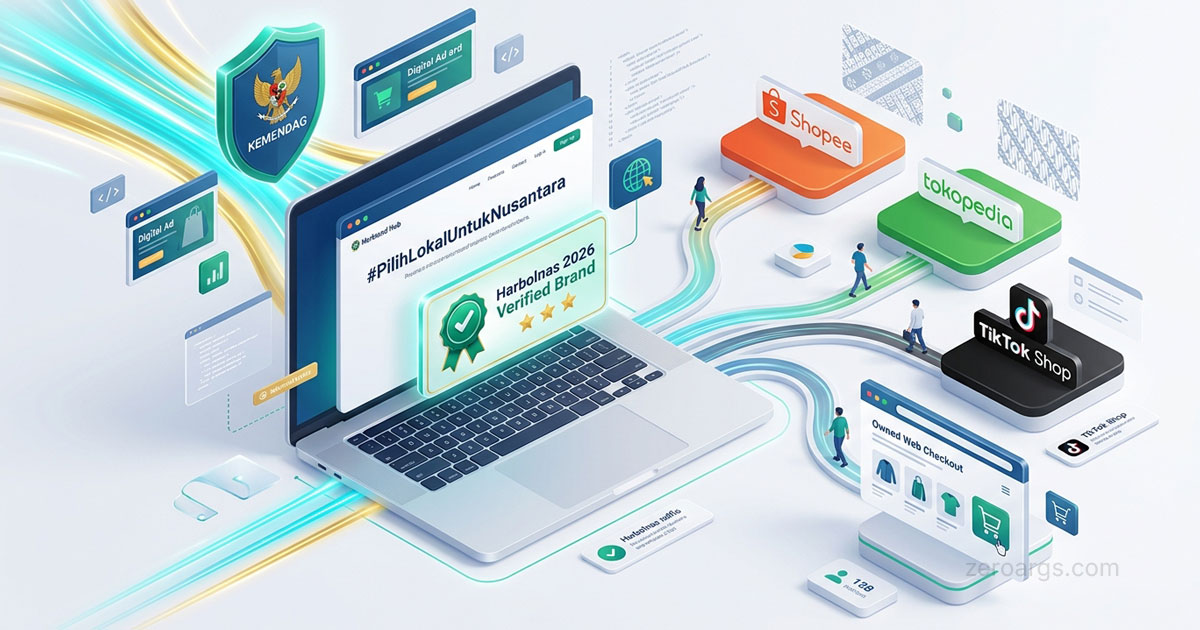
- Marketplaces and social commerce for demand and SKU experiments.
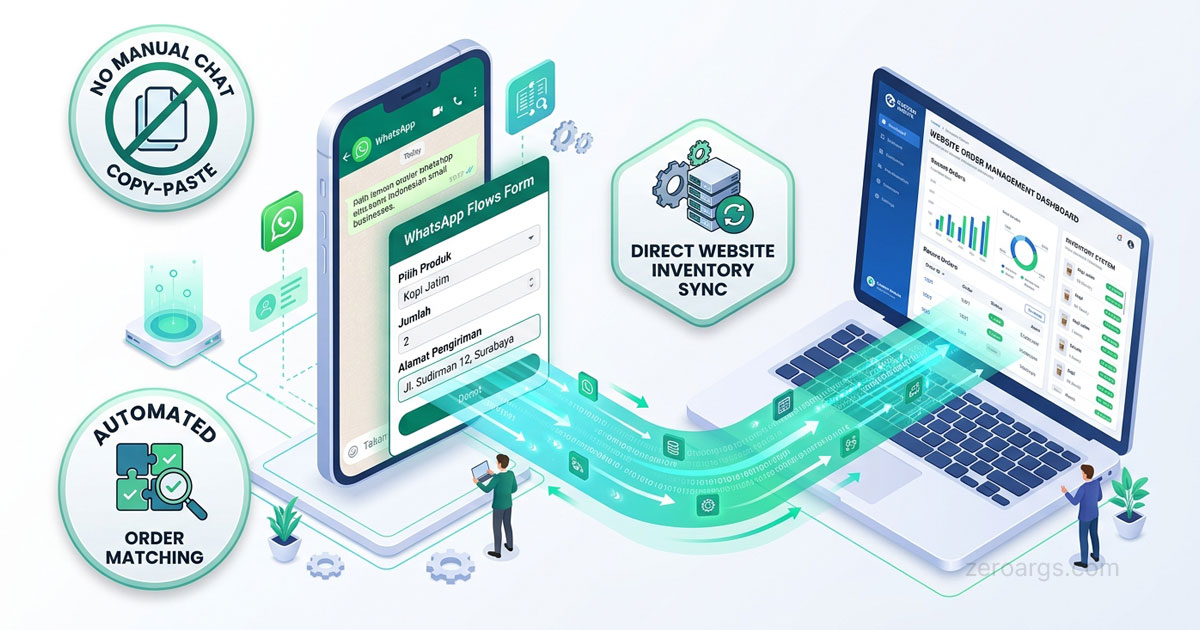
- WhatsApp Business for fast conversion — with a catalog or links to authoritative detail pages.
- A website as the “official reference” for baseline pricing, portfolio, shipping terms, and a simple privacy policy.
With this trio, customers can find you from ads or viral content, read the official details on the web, then close in chat — a common Indonesia buying journey. The operational requirement is consistency on baseline price, stock, and shipping promises so the experience does not feel like three different companies.
5. Payments, Privacy, and Lightweight Compliance
As more orders involve QRIS and virtual accounts, customers need clarity on how payment proof is verified — especially if you collect names, addresses, or dietary preferences. Indonesia’s Personal Data Protection Law (UU PDP) does not demand a hundred-page policy for every micro-business, but it does expect basic transparency: what you collect, why, and how customers reach you.
A clear privacy page and contact page are not decoration: they reduce friction when you sell to small institutions or when partners ask for proof of serious operations. If you want a practical starting checklist, read our guide to Indonesia's data protection law for business websites and apps.
6. Website MVP: Which Pages Pay Back First?
You do not need dozens of landing pages in week one. The sequence that usually delivers the best effort-to-outcome ratio:
- Home: value proposition, short social proof, links to active sales channels.
- Products or services: explain higher-margin variants; avoid mirroring your entire marketplace catalog if it increases operational load.
- How to order: match the workflow your team actually uses every day — the site should not promise a different process than WhatsApp.
- Operational FAQ: service areas, production lead times, simple warranties.
- Contact / location: so Google Business Profile and your site reinforce each other for local Indonesia discovery.
If you sell services around a regional hub like Nganjuk, one services page with a short case study often outperforms a rarely updated long-form blog — for example our website development page for Nganjuk.
7. Costs and Expectations That Stay Grounded
A modern website can be inexpensive to launch: hosting in a region close to users (for many stacks, GCP asia-southeast2 in Jakarta is a common choice) plus a domain are the steady-state core. What usually costs more than technology is content discipline — product photography cadence, price copy updates, and stock reconciliation.
So measure MVP success with operational metrics, not vanity traffic alone:
- Do chats shrink for the same repetitive questions?
- Do small B2B orders arrive with more complete information?
- Can your team keep three core channels consistent this month?
If yes, your website is doing its job — even if organic traffic is still modest.
Conclusion
Marketplaces and TikTok Shop deserve a place in your early growth engine, but an owned website for Indonesian SMEs remains the foundation that supports brand, margin, and communication that cannot fit inside a listing template. You do not need futuristic features; you need a few honest pages that match how your team actually serves customers.
If you want to design a web MVP that is light to operate but ready to grow — payment flows, WhatsApp handoffs, and SEO structure that fits the Indonesia market — share your constraints and operational reality with us. Start a conversation and we will help you prioritize technical decisions that ship, not a feature list that hangs in the air.