- engineering
- mvp
- startup
Indonesia Data Protection for Business Web Apps: Practical Guide
Indonesia data protection (UU PDP) for business web apps: practical data mapping, vendor review, logging hygiene, and a go-live checklist for engineering teams.
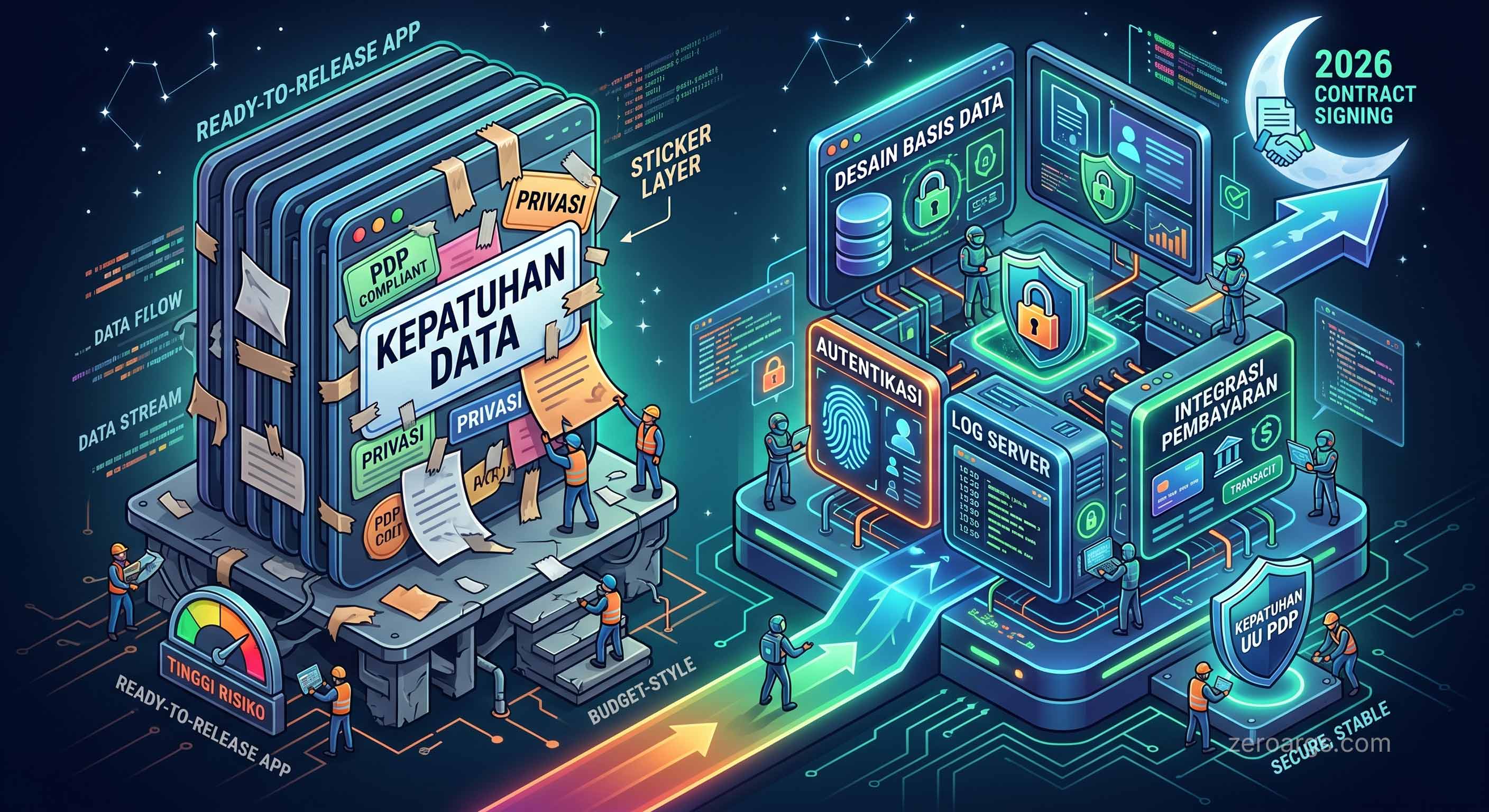
Indonesia's personal data protection framework — commonly discussed under the Indonesian abbreviation UU PDP — is not only a legal slide in a sales deck. It changes how you design authentication, backups, analytics, and payment flows. In 2026, B2B buyers increasingly ask for privacy posture before procurement, and your team ships faster when compliance is treated as product behavior rather than a last-minute PDF.
This guide is written for builders helping startups and larger MSMEs: what to map first, how to be transparent without overbuilding, and a pragmatic checklist before real user traffic hits new surfaces.
1. UU PDP is system behavior, not a policy page accessory
At a high level, the framework expects you to minimize collection, clarify purpose, secure processing, and honor data-subject rights. For digital products, that translates into concrete engineering work: every signup form, marketing cookie, push notification token, or CSV export is a data path with an owner, an access pattern, and a retention story.
A common failure mode is copying an English privacy template that does not match production reality. Misaligned disclosures become a reputational liability when something goes wrong. A healthier approach is to start with a data-flow diagram — the same habit you use for features — and derive policy text from what actually ships. If you are still stabilizing operational foundations, the sequencing ideas in our article on digital transformation for MSMEs in Indonesia help place orders and payments before advanced tracking layers.
2. Map collection points across web, mobile, backend, and third parties
Begin with user-visible surfaces:
- Contact and registration forms: name, email, phone, address, file uploads.
- Authentication: session tokens, refresh tokens, login attempts, password resets.
- Payments: payer identity, transaction metadata, receipts — often via gateways such as Midtrans or Xendit that process data on your behalf.
- Analytics and marketing: pixels, tag managers, deep links into apps, and product event streams.
At the server layer, scrutinize application logs that might capture emails in query strings, database backups stored with cloud providers, and email/SMS notifications that copy personal data into another channel. Each arrow in the diagram is processing that should have a business justification and a named owner on the team.
3. Operational transparency: policy, consent, and preferences
A strong privacy page answers practical questions: what you collect, why, how long you keep it, which third parties are involved, and how users reach you to exercise rights. Plain language usually beats dense legal jargon when your readers are busy MSME operators.
For non-essential features — newsletters or marketing analytics — it is reasonable to separate consent from core terms of service. Technically, store consent evidence with a timestamp tied to the policy version users accepted. When someone withdraws consent, ensure pipelines actually stop sending data to the related vendor, not just hide a toggle in the UI.
4. Vendor chains: contracts, processing locations, and payments
Most products rely on cloud infrastructure, transactional email, or observability tools. That is where processors become real: you remain responsible for selecting vendors with reasonable security controls and for sharing the minimum data required for the job.
During evaluation, ask engineering questions that documentation can answer: encryption in transit and at rest, role-based access controls, data deletion support, and region placement that balances latency with internal policy — for example using a Jakarta-capable region when available. For payments, document what lives in your systems versus what is only surfaced as status from the payment gateway.
5. Data-subject rights: design operations, not promises
Access, correction, or deletion requests become operations, especially for B2B products with many users per customer. Your team should know:
- Where profile data lives (which tables, replicas, caches).
- How to delete or anonymize related traces in logs — or enforce consistent retention where full deletion is impractical.
- Who approves sensitive requests when other retention duties apply (for example financial evidence).
The earlier you define a small internal script or runbook for handling requests, the cheaper it is compared with manually spelunking production databases under legal time pressure.
6. Minimum viable security controls aligned with small teams
Compliance does not demand perfection; it demands reasonable control. High-leverage practices for lean teams:
| Area | Realistic practice | Why it matters |
|---|---|---|
| Transport | Full HTTPS, HSTS on public domains | Prevents credential and token interception |
| Access | MFA on cloud consoles, least-privilege DB credentials | Reduces blast radius of admin mistakes |
| Secrets | API keys in a secrets manager, not in git | Closes the most common exfiltration path |
| Backups | Encrypted backups, key rotation, periodic restore tests | Backups are a frequent forgotten attack surface |
| Logging | Avoid logging raw request bodies that contain PII | Noisy logs become a retention liability |
Pair this with retention discipline: how long application logs live, when error samples are purged, and how staging is populated — avoid copying full production databases to laptops without controls.
7. A go-live checklist before real traffic
Treat this as an internal release gate:
- The data diagram is updated for the new feature and reviewed by a tech lead.
- The privacy policy reflects real behavior, including any new vendors.
- Marketing/analytics consent is wired to a server-side user flag, not only the UI.
- Sensitive tables have tight access paths; default credentials are disabled.
- Backups and restores were tested after major schema changes.
- A one-page incident runbook exists: who to call, how to rotate API keys, and how to communicate with customers.
If your product includes intelligent features that process user text, many themes overlap with our guide on practical AI integration for business apps in Indonesia — merge privacy reviews so you do not ship conflicting policies across teams.
Conclusion
Indonesia data protection compliance for business web apps works best when teams treat personal data like an asset with a lifecycle: collected with a clear purpose, processed with minimal access, observed through disciplined logging, and deleted or exported when business and legal constraints allow. This does not replace counsel for complex cases, but it shrinks the gap between marketing promises and production behavior.
If you are planning a release that handles customer data — from a simple B2B portal to a mobile app with payments — we help design architecture and operational checklists that match your team size. Start a conversation with your problem domain, stack, and key vendors, and we can discuss technical priorities that make sense for the next few weeks, not a control list that only looks good in a slide deck.


