- umkm
- engineering
- mvp
- e-commerce
UMKM Digitalization Roadmap 2025-2030: Website & App Guide
Indonesia's UMKM digitalization roadmap 2025-2030: four program pillars, website and app checklist, QRIS, AI-ready data, and realistic tech priorities for SMBs.

Indonesia's Ministry of Cooperatives and SMEs launched the UMKM Digitalization Roadmap 2025-2030 — a national strategy to accelerate digital transformation for more than 12 million micro, small, and medium enterprises over five years. Whether you operate in Nganjuk, Kediri, Surabaya, or anywhere else in the country, the question is no longer whether digitization matters, but which technical assets you need so training programs, financing, and marketplace integration produce real operational impact.
This article translates the UMKM digitalization roadmap from policy language into an engineering checklist: websites, apps, payments, and data that a small team can actually build — without buying an expensive ERP on day one.
1. What the UMKM Digitalization Roadmap 2025-2030 Covers
The UMKM Digitalization Roadmap 2025-2030 is a policy foundation focused on operational efficiency, competitiveness, and technology-enabled market access. It complements existing initiatives — UMKM Go Digital, Sapa UMKM, and cross-ministry training — with clearer medium-term targets.
What often gets missed: this roadmap is not a mandatory app download list. It signals that government, banks, and platforms will increasingly assume your business has a digital identity, a transaction trail, and basic AI readiness — even at small scale. Without owned channels and clean data, program benefits tend to stop at training certificates.
2. Four Program Pillars — and Your Technical Responsibilities
The roadmap is built on four pillars. This table maps each pillar to technical work you can start without a large IT team:
| Roadmap pillar | Government focus | What to build on your side |
|---|---|---|
| Basic AI training | Generative AI literacy, CS automation, simple analytics | Structured product catalog, consistent FAQs, organized chat logs |
| Online financing access | UMKM credit, data-driven credit scoring | Monthly revenue reports, separate business account, transaction history |
| Marketplace integration | Onboarding on Tokopedia, Shopee, Blibli, TikTok Shop | Reference website, SKU/stock sync, consistent branding |
| Digital payment systems | QRIS, EDC, e-invoicing | Payment gateway, automated reconciliation, Coretax readiness |
These four pillars lock together. AI training fails if product data lives in chat screenshots. Digital financing is harder to approve when revenue exists only in the owner's memory. Marketplace integration without an owned website leaves you exposed when platform policies change — including commission increases many sellers faced in 2026.
3. AI Training Pillar: Prepare Digital Assets Before Automation
The first pillar targets generative AI training, customer-service automation, and simple data analysis across hundreds of cities and districts. From an engineering perspective, AI is only as good as the data you feed it.
Before signing up for training or deploying a chatbot, organize:
- A structured product catalog — name, price, variants, stock, and photos with consistent descriptions. Start in a spreadsheet, then move to a website or headless CMS.
- A FAQ knowledge base — official answers on shipping, returns, hours, and payment methods. Without this, AI chatbots hallucinate.
- Organized conversation logs — order status labels in WhatsApp Business or a simple ticket system so AI (or staff) has context.
You do not need to fine-tune your own model. A sensible pattern for MSMEs: RAG (retrieval from internal documents) plus routing to a human agent for sensitive cases — a topic we cover in a separate article on practical AI integration. Start with one workflow, such as stock inquiries, before automating all of customer service.
4. Digital Financing Pillar: Financial Data That Can Be Audited
The second pillar connects MSMEs with fintech and banks — including low-interest credit and data-based credit scoring. This is where daily habits meet scoring systems.
Practical steps:
- Separate business and personal accounts. Route all QRIS and customer transfers through one reportable business account.
- Record monthly revenue consistently — Indonesia's Coretax DJP portal supports monthly turnover reporting for MSMEs; your internal data should align to avoid reconciliation surprises.
- Preserve transaction history from payment gateways (Midtrans, Xendit, Doku) or marketplace exports. This is stronger income evidence than screenshots.
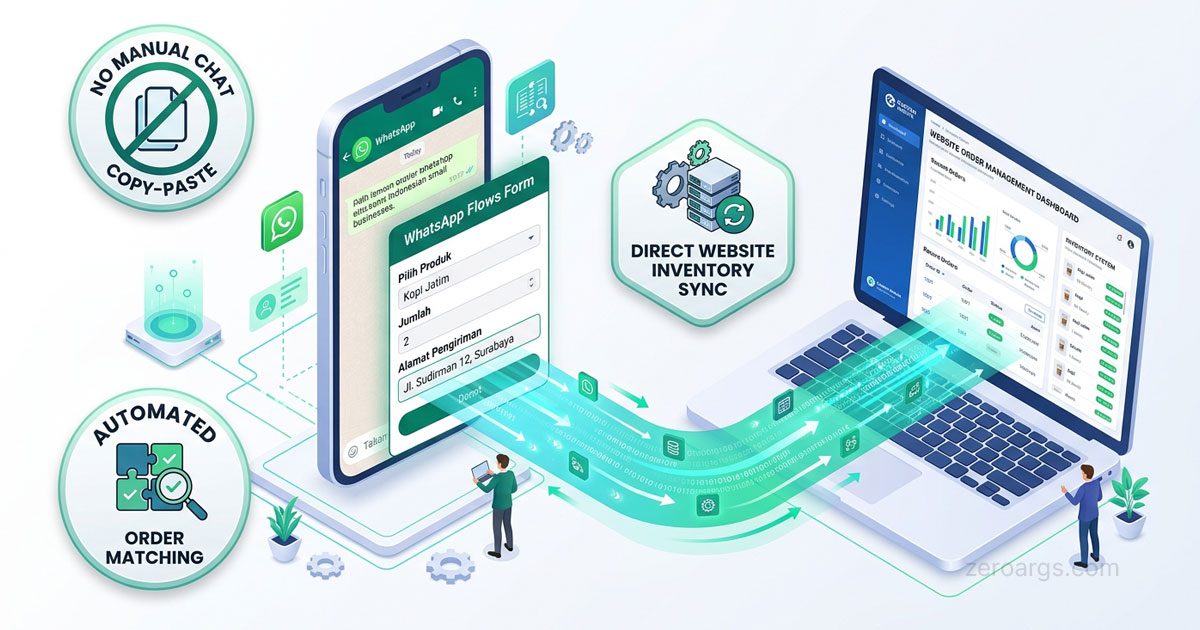
If you sell through your own website, integrate payment webhooks so paid status is recorded automatically — not typed manually every night. This small investment often matters more for credit eligibility than a polished pitch deck.
5. Marketplace Integration Pillar: A Channel You Control
The roadmap targets 70% of formal MSMEs connected to marketplaces by 2028. That reach is valuable, but marketplaces are not yours. Commission rules, algorithms, and seller requirements can change — and have changed — with little warning.
A website or PWA you control serves as:
- An official reference — address, contact, and policies consistent across Sapa UMKM, Google Business Profile, and marketplaces.
- A higher-margin channel — repeat customers order directly without platform fees.
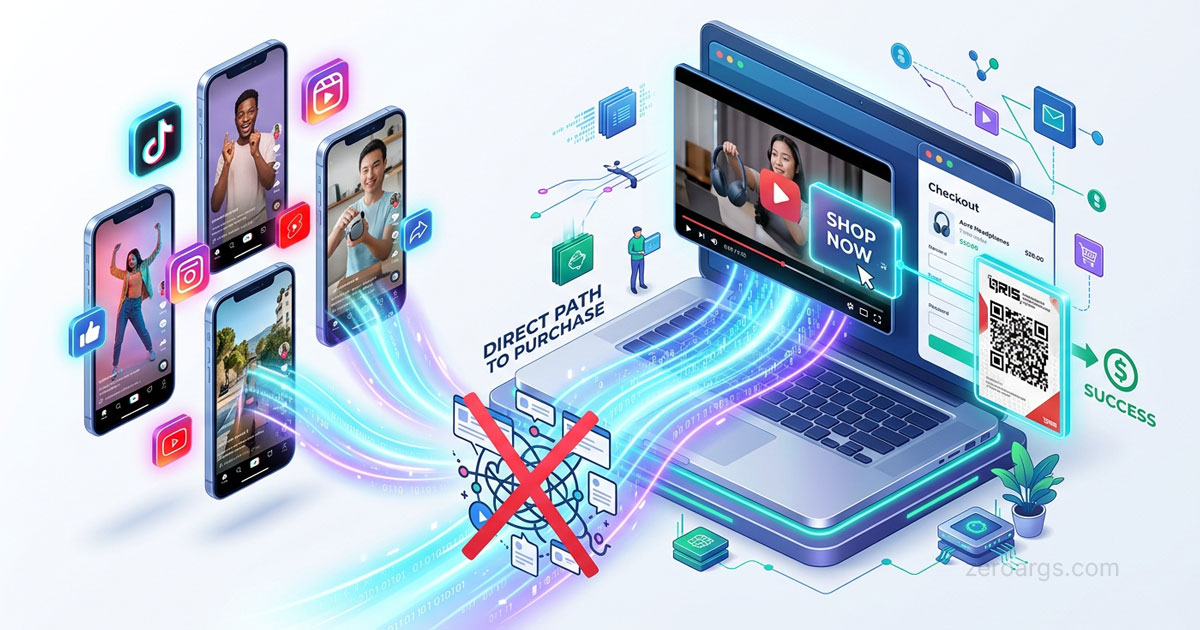
- A campaign landing page — Meta or TikTok ads point to pages you measure, not competitor listings on the same marketplace.
Stock sync across marketplaces and your site does not need to be real-time on day one. Start with one spreadsheet or order system as the source of truth, then automate in stages. Our article on omnichannel inventory sync goes deeper on this pattern.
6. Digital Payments Pillar: QRIS, Reconciliation, and E-Invoicing
The fourth pillar promotes QRIS, EDC, and e-invoicing so transactions are digitally recorded. Government data shows QRIS adoption among merchants continues to rise — and digital payments are treated as the foundation of MSME digitization.
For businesses with a website or app:
- Enable dynamic QRIS through a payment gateway so amounts and order references match automatically.
- Standardize checkout — one confirmation page, one order ID, one payment proof.
- Prepare for tax compliance — MSMEs below certain turnover thresholds still file reports; Coretax DJP replaced legacy portals in 2025. Sales data from your website simplifies monthly reconciliation.
If you are a VAT-registered taxpayer (PKP), e-invoicing through Coretax requires real-time validation. Your billing system must produce accurate transaction data — buyer name, tax ID when applicable, and line-item values — not rough totals at month-end.
7. Technical Priorities for Small Teams: A 90-Day Roadmap
The government roadmap spans five years; your business needs a sequence you can run in one quarter:
| Week | Focus | Output |
|---|---|---|
| 1–2 | Sales channel audit | List every selling point plus biggest operational pain |
| 3–4 | Reference website + consistent contact | Domain, product/service pages, uniform WhatsApp and address |
| 5–6 | Digital payments | Integrated QRIS/VA or a standardized manual process |
| 7–8 | One source of truth for orders | Spreadsheet, POS app, or lightweight system |
| 9–10 | Sync one marketplace | SKUs and stock without double-selling |
| 11–12 | Small AI or automation pilot | Auto FAQ or smart reply templates |
Do not reverse the order: deploying an AI chatbot in week one while stock is still counted manually almost always produces complaints, not efficiency.
Conclusion
The UMKM Digitalization Roadmap 2025-2030 sets clear policy direction — AI, financing, marketplaces, and digital payments — but execution sits with you. A clean website, app, and payment integration are not luxuries; they are infrastructure that makes government programs, training, and credit access actually usable.
If you want technical priorities aligned with this roadmap — from a reference website and QRIS integration to data foundations for AI — the Zero Args Technology team can help design a realistic MVP for your MSME scale. See website development in East Java or website development in Surabaya for company-profile and catalog scope, then Start a conversation and share your sales channels and team capacity; we begin from operational problems, not a hanging feature list.
Frequently asked questions
What is the UMKM Digitalization Roadmap 2025-2030?
The UMKM Digitalization Roadmap 2025-2030 is Indonesia's national strategy from the Ministry of Cooperatives and SMEs to accelerate digital transformation for more than 12 million micro, small, and medium enterprises through four pillars: basic AI training, online financing access, marketplace integration, and digital payment systems including QRIS and e-invoicing.
Does the roadmap legally require every UMKM to have a website?
The roadmap does not legally mandate a website, but it emphasizes an inclusive digital ecosystem. A website or app you control makes payment integration, data reporting, and AI readiness easier without depending entirely on third-party platform policies.
Which pillar should a business without an IT team prioritize first?
Start with digital payments and order reconciliation, then simple consistent operational data. AI training and marketplace integration work better once orders, stock, and payments are recorded in one source of truth.
How does this roadmap relate to Sapa UMKM?
Sapa UMKM is the government's superapp for identity, legal compliance, and support programs. The digitalization roadmap is the broader policy framework. Your business website still serves as a sales channel and operational data layer that complements your Sapa UMKM profile.