- ai
- engineering
- mvp
- startup
AI Agents for Indonesian Businesses: Practical Guide
AI agents for Indonesian businesses: when workflow automation is worth it, cost and data risks under Indonesia's PDP Law, MVP architecture patterns, and metrics to track before you ship.
AI agents for business automation dominated product roadmaps in 2026 — from customer operations to internal scheduling. The engineering reality is less magical: agents need explicit permissions on which data they may read, which tools they may call, and how humans stay accountable when something misfires.
This article separates AI agents from simple chatbots, explains when they earn a place in Indonesian SMB and startup stacks, and gives a practical architecture checklist your team can use in the next planning session.
1. What “AI Agents” Mean on a Real Roadmap
In product engineering, an agent usually means a system that plans multiple steps, calls tools (databases, ticketing APIs, WhatsApp Business endpoints), and loops until a completion criterion is met. That differs from a single-turn language model response that only returns text.
The operational implication: you need explicit action permissions, audit logs, and inference budgets. Without them, “agents” become expensive demos that surprise users whenever prompts or underlying models shift behavior.
2. When AI Agents Beat Fixed Rules or Lightweight Chatbots
Start from the workflow, not the buzzword. AI agents make sense when work:
- spans several systems with different data shapes, yet the steps are still definable;
- benefits from light reasoning between structured steps — for example choosing the correct reply template before anything is sent on an official channel;
- gains from summarization or field extraction, provided automated validation runs before risky actions fire.
If most of your volume is repeated questions with stable answers, rule-based routing plus a curated knowledge base is often cheaper and easier to audit. Our guide on practical AI integration for business apps covers patterns such as RAG and intent classification — many teams start there before adding agentic behavior.
3. Risks Teams Skip: Cost, Latency, and Indonesia’s PDP Law
Agent loops can inflate token spend, especially when long contexts are re-sent on every step. Each step that touches personal data lengthens the processing chain you must explain to customers and regulators.
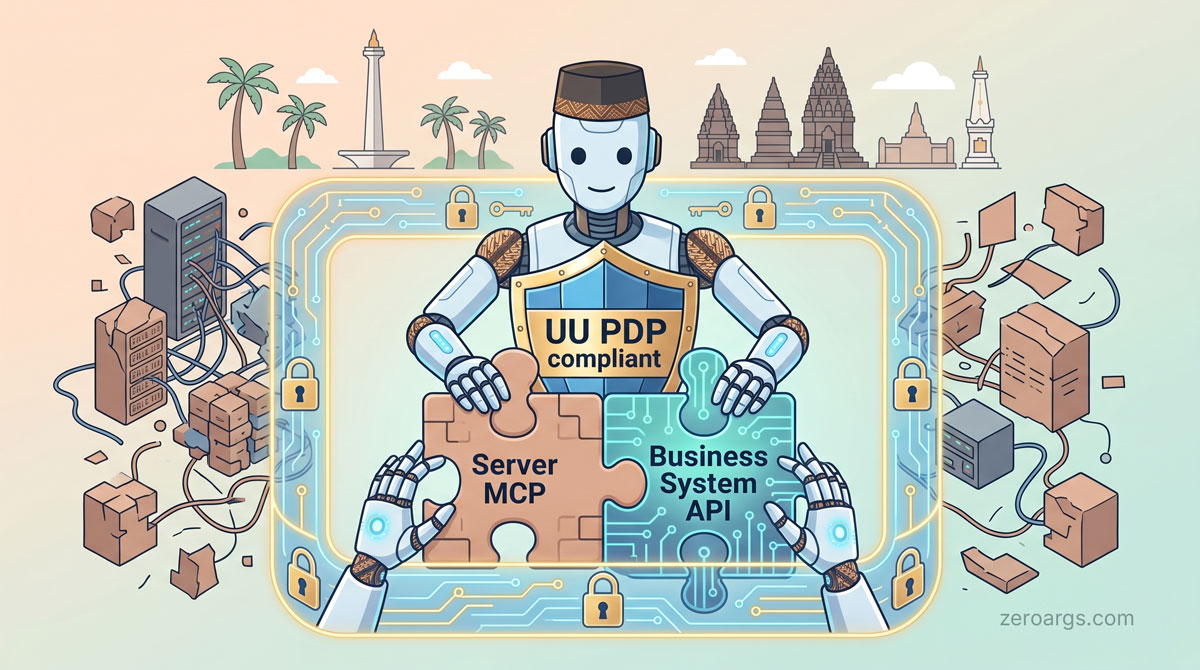
Indonesia’s Personal Data Protection Law (UU PDP) expects clarity on processing purposes, access limits, and log retention. When an agent reads customer chats or internal documents, treat that as an expanded attack surface, not a UX flourish. For baseline compliance framing, see our practical PDP guide for web and business apps.
4. MVP Architecture Patterns That Stay Maintainable
Three layers keep small teams shipping safely:
- A short planner that outputs a bounded step list instead of an open-ended plan.
- An executor that only calls audited functions — for example draft a ticket, not drop a production table.
- A policy checker that blocks actions outside business hours, outside token budgets, or outside approved data regions.
Keeping the agent intentionally narrow at launch is a feature. You widen scope after quality metrics stabilize, not before.
A concrete operations example: an e-commerce support team might let an agent read internal order status, pull a tracking number from a logistics API, and draft a reply — but only after a policy checker confirms the conversation belongs to the right customer and does not contain refund disputes that require manual review. The same pattern fits merchants selling through Tokopedia, Shopee, or TikTok Shop as long as marketplace data syncs into a single source of truth so the agent is not guessing status from chat fragments alone.
5. Human-in-the-Loop Design That Survives Audits
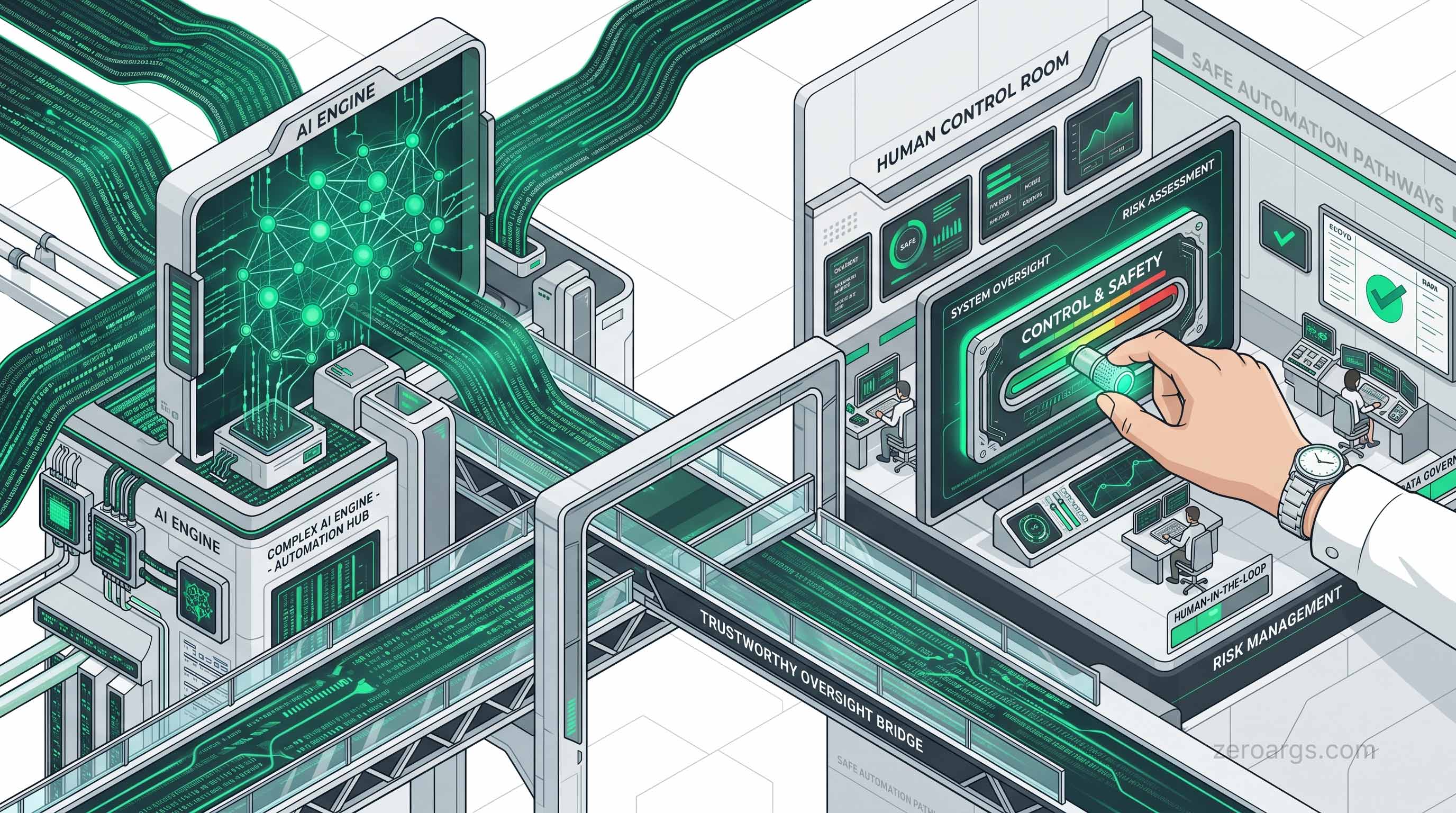
For high-stakes workflows — complaints, billing, partner coordination — keep human approval before outbound public messages or money movement. Agents can assemble drafts with cited sources; humans perform final verification.
That posture helps compliance storytelling and gives operations teams assistive tooling instead of brittle full automation. Payment flows that touch QRIS or major e-wallets must still follow processor-approved paths; do not let a language model invent settlement logic on the fly.
6. Metrics Worth Tracking Before and After Launch
Measure operational impact, not “we shipped AI.” Useful metrics include:
- median time-to-resolution for categories the agent assists;
- human escalation rate;
- percentage of attempted actions blocked by policy checks;
- inference cost per completed ticket, not only monthly totals.
Without these signals, it is hard to tell whether AI agents for Indonesian businesses reduced workload or simply added moving parts.
Before launch, keep a small anonymized “golden set” of real questions and rerun it whenever prompts, tool lists, or model providers change. Catching quality regressions in staging is cheaper than reputation incidents after customers share screenshots of incorrect replies on social channels.
7. Ship a Narrow Scope First, Then Expand With Discipline
A sensible rollout sequence for many Indonesian startups and SMBs:
- Ticket summarization for human agents — no automated customer replies yet.
- Next-step suggestions grounded in curated knowledge — with source citations.
- Only after quality stabilizes, allow a small set of safe functions (for example updating internal labels).
If digital foundations are still shifting, align operational priorities first using our digital transformation guide for MSMEs in Indonesia before layering agent complexity.
8. Quick Comparison: Fixed Rules, RAG Chat, and Agents
| Approach | Best when | Main upside | Main risk |
|---|---|---|---|
| Rules + workflow | Questions follow stable patterns | Low cost, easy to audit behavior | Less flexible on edge cases |
| RAG + chat surface | Answers must stay grounded in official docs | Handles question variation better | Quality depends on document hygiene |
| Bounded agents | Many steps across systems but still constrainable | Cuts repetitive manual work | Token cost, testing burden, audit logging needs |
Conclusion
AI agents for Indonesian businesses succeed when you anchor on measurable problems, constrain permitted actions, and keep humans on the riskiest decision points. Pairing PDP-aware data discipline with incremental product iteration builds customer trust that outlasts a flashy but fragile demo.
If you are planning agents for a website, internal app, or WhatsApp Business operations, we help design architectures that match your team size and compliance reality. Start a conversation with your target workflow, systems in scope, and the success metrics you need to hit.