- umkm
- e-commerce
- engineering
- mvp
Omnichannel Inventory Sync for Indonesia SMBs: Architecture
Omnichannel inventory sync for Indonesian SMBs: one source of truth, payment callbacks, stock race handling, and a lean MVP roadmap for small teams.

Omnichannel inventory sync becomes a practical problem the moment orders stop arriving from a single place: marketplaces, WhatsApp threads, Instagram catalogs, and maybe your own website. In Indonesia, customers already expect QRIS, virtual-account transfers, or e-wallets — but the pain for small teams is usually not “how to accept money”, it is tying payments and stock to one coherent catalog without overselling. This article lays out architecture decisions that fit a small team, not a promise of magic software.
If you are still sequencing broader digital work, the priorities in our digital transformation guide for MSMEs in Indonesia still apply: stabilize pay-to-order flows first, then streamline selling channels. For why an owned site still matters alongside marketplaces, see why Indonesian SMEs still need a website beyond marketplaces.
1. When omnichannel operations start to wobble
Typical warning signs appear gradually:
- Spreadsheet stock no longer matches what buyers see on Tokopedia or Shopee, so you cancel after payment.
- Two people answer chats about the same SKU and both say it is available.
- Daily reconciliation drags on because QRIS receipts, VA references, or bank notifications must be matched manually to order rows scattered across tabs.
At that point the issue is not effort, it is the absence of a single rule for where “true” stock lives and who may change it. Without that, every channel keeps pulling from a different source.
2. Omnichannel inventory sync starts with one source of truth
The cheapest conceptual step — not always the easiest habit change — is picking one system as the source of truth. Three common patterns:
| Pattern | When it makes sense | Main risk |
|---|---|---|
| Marketplace as master | You sell almost entirely on one platform and the site is mostly a brochure | API or policy changes ripple through everything |
| Small spreadsheet or DB as master | Very small team needing fast flexibility | Concurrency: two editors, no versioning |
| Your app backend as master | You run a site or POS app and want other channels to follow | Requires clear upfront engineering |
For many SMBs with a lean digital team, a small backend or central database is the balanced anchor: marketplaces and chat become order ingress channels, but stock numbers only change through the same rules (for example after payment is verified or after shipping is confirmed).
3. Channel integration: APIs, webhooks, and scheduled files
Not every channel exposes a tidy API. Real deployments usually mix:
- Webhooks or order notifications from official providers — when available, they beat refreshing dashboards every hour.
- Scheduled exports or imports (CSV, daily reports) for channels without stable automation — treat these as temporary bridges, not an endless plan.
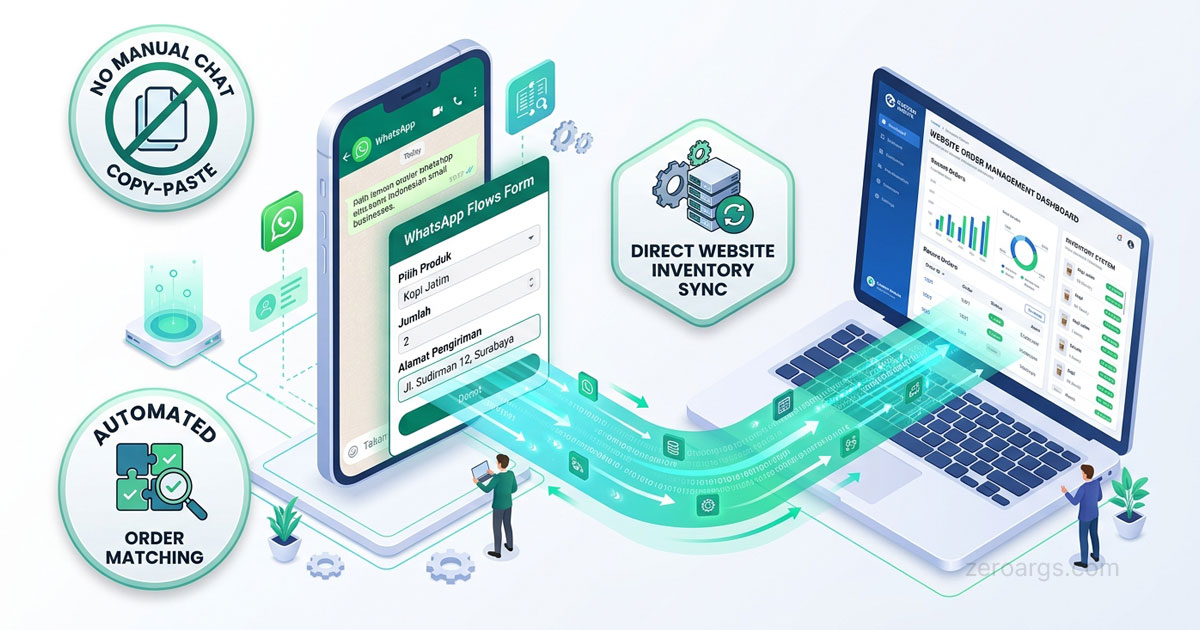
- Controlled manual entry for WhatsApp orders — it is often safer to enqueue “unpaid” than to decrement stock the instant a message arrives. Messaging patterns are covered in our WhatsApp Business API practical guide.
Even modest engineering should enforce idempotency. An order must not reduce stock twice because a webhook retried after a network timeout. Store the external order id and reject duplicates before touching inventory.
4. Binding payments to order state
Indonesian buyers expect QRIS, virtual accounts (for example BCA, BRI, Mandiri, BNI), or e-wallets (GoPay, OVO, DANA, ShopeePay). Processors such as Midtrans or Xendit often provide server-to-server callbacks — use them to move orders from pending to paid automatically, then decrement stock if that is your business rule.
If many payments stay manual, standardize a payment reference code on every instruction so finance can match without guessing from chat threads. Cleaner reconciliation reduces both overselling and the opposite failure mode: stock locked too early because “maybe they paid”.
5. When two channels sell the last unit at the same time
A race condition is not academic jargon: it happens when stock shows “1” for two nearly simultaneous checkouts. Common mitigations:
- Pessimistic locking on the stock row while checkout is in flight, or
- A reserved stock model — available = on-hand minus paid-but-not-shipped, with a clear timeout for unpaid holds.
For small teams, a conservative rule set (slightly more “sorry, just sold out” than “sorry, we oversold”) usually costs less trust than repeated apologies after payment.
6. Lightweight audit logs and sensible data hygiene
Whenever stock changes because of an order, warehouse adjustment, or return, store a short trail: who, when, SKU, delta, and order reference. That makes debugging calm instead of chaotic, and aligns with baseline expectations under Indonesia’s Personal Data Protection Law (UU PDP): you do not need enterprise tooling, but you should know who can see customer data and operational logs.
7. A three-stage MVP roadmap for small teams
Keep scope from ballooning:
- Stage 1 — One centralized order list with paid/shipped states, even if early entry is semi-manual.
- Stage 2 — Payment callbacks automatically locking stock for your primary channel.
- Stage 3 — Outbound stock sync to marketplaces (price and quantity) per the APIs you use, with sane rate limits.
| Approach | Engineering cost | Oversell risk | Best for |
|---|---|---|---|
| Manual across tabs | Very low | High | Very low volume |
| Central spreadsheet + strict process | Low | Medium–high | Tiny, very disciplined teams |
| Lean backend + callbacks + stock rules | Medium | Low if designed well | Multi-channel growth |
Conclusion
Omnichannel inventory sync boils down to one source of truth, payment rules that define when stock decreases, and guards against duplication and races — not about opening as many channels as possible. Start from the pain you hit most (usually reconciliation or overselling), then choose integrations that match team size.
If you want help designing a lean backend, order queues, or payment integration that fits daily operations, see website development in Nganjuk and start a conversation with us — we work with businesses in Nganjuk, East Java, and across Indonesia on maintainable digital products without over-engineering.