- e-commerce
- engineering
- umkm
- mvp
Headless Commerce for Indonesian Businesses: A Practical Guide
Headless commerce for Indonesian businesses: when API-first architecture makes sense, minimal stack design, QRIS and marketplace integration, and a realistic MVP roadmap.
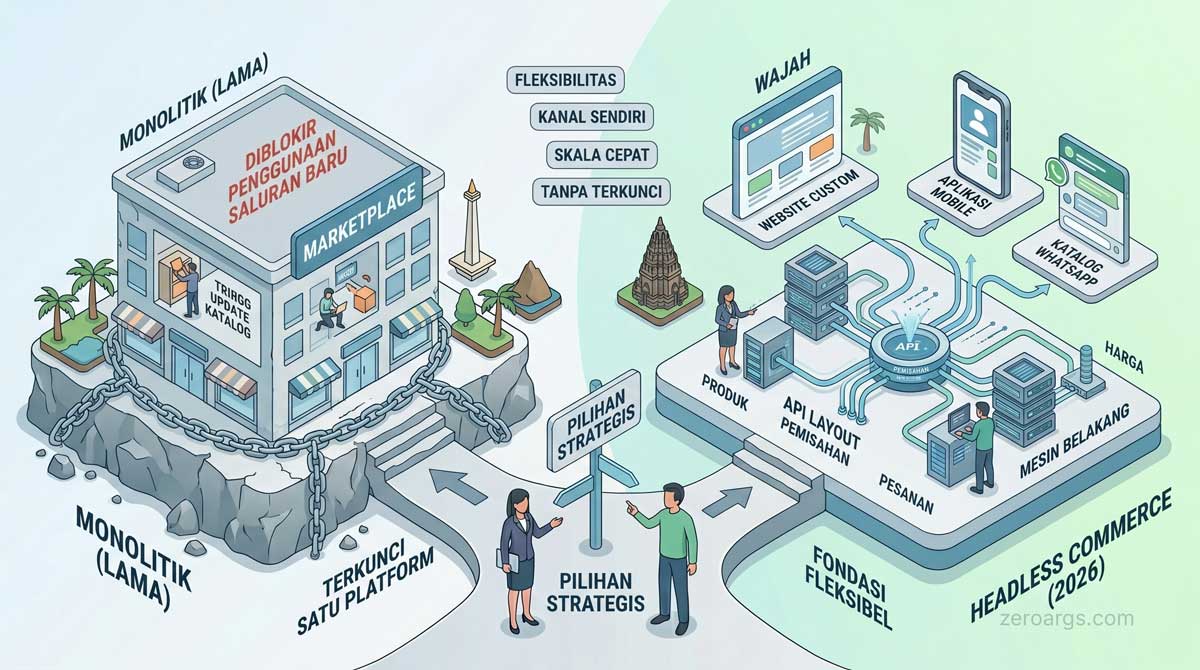
Headless commerce gets labeled a 2026 e-commerce trend, but for many Indonesian business owners it sounds like jargon for global brands. The idea is simple: separate the "face" of your store — website, app, or WhatsApp catalog — from the engine that manages products, inventory, pricing, and orders. When marketplace fees rise and you want an owned channel without vendor lock-in, this architecture is often more flexible than rebuilding the store every time you add a sales channel.
This article covers when headless makes sense in Indonesia, a minimal architecture you can grow, and how to integrate QRIS, Tokopedia, Shopee, and couriers like JNE or J&T without a large engineering team. For digital foundations, also see digital transformation for Indonesian MSMEs and omnichannel inventory sync.
1. What headless commerce is — and what it is not
In a traditional monolithic setup, storefront presentation and business logic live in one system. WooCommerce, Shopify, and off-the-shelf store templates fall into this category: you customize design through themes, but data structure and checkout flows follow platform constraints.
Headless commerce inverts that pattern. The "body" — product catalog, cart, orders, customers, inventory — runs as a backend accessed through APIs. The "head" or frontend can be a Next.js website, an installable PWA, an Instagram Shop catalog, or an internal interface for your sales team. The two communicate through HTTP requests, not tightly coupled code.
What matters: headless does not mean building everything from scratch. Many businesses use an existing commerce engine (Medusa, Saleor, or a custom backend) and add frontends tailored to their brand. Headless is also not the right answer for every small business — if you are just starting online with a two-person team, a monolithic platform is usually faster to launch.
2. Signals that your business is ready to consider headless
Operational signs that a monolith is becoming a bottleneck:
- You sell on three or more channels — marketplace, website, WhatsApp, physical store — and each channel requires manual product or price alignment.
- Marketing wants to redesign the storefront frequently (seasonal campaigns, dedicated landing pages) without touching checkout logic or payment integrations.
- You need a branded mobile app or PWA that feels native, but do not want to maintain separate codebases for web and mobile.
- Integration with internal systems — a small ERP, operational spreadsheets, or an inventory dashboard — requires a stable API, not fragile plugins.
Delay headless if: online revenue is still under roughly IDR 50 million per month, no single channel is stable yet, or your team has never managed its own website. At that stage, a monolithic business website with payment gateway integration is usually the better fit.
3. Minimal architecture: three layers enough to start
Headless commerce does not have to be complex. For mid-sized businesses in Indonesia, these three components form a foundation that can grow:
Layer 1 — Commerce backend (source of truth). Stores products, variants, prices, stock, orders, and customer data. This can be a custom backend (Node.js, Laravel, Go) or an open-source engine. The critical principle: one source of truth for inventory — the same rule discussed in our omnichannel sync article.
Layer 2 — API gateway. A standardized entry point for all frontends and external integrations. Endpoints like GET /products, POST /orders, and PATCH /inventory let your website, app, and marketplace sync workers read the same data.
Layer 3 — Frontend(s). Store website, PWA, or even a WhatsApp catalog bot — all consuming the same API. Frontends can be replaced or added without changing the backend.
A simple checkout flow:
POST /api/v1/orders
{
  "items": [{ "sku": "KOPI-001", "qty": 2 }],
  "shipping": { "courier": "jne", "service": "REG" },
  "payment_method": "qris"
}
The backend validates stock, calculates shipping through a logistics API, creates an invoice, and returns a QRIS payment URL from Midtrans or Xendit. The frontend only displays the result — it does not need to know payment integration details.
If this API-first pattern matches your channel plans, see our headless commerce service for the MVP scope we typically build with Indonesian MSMEs and local brands.
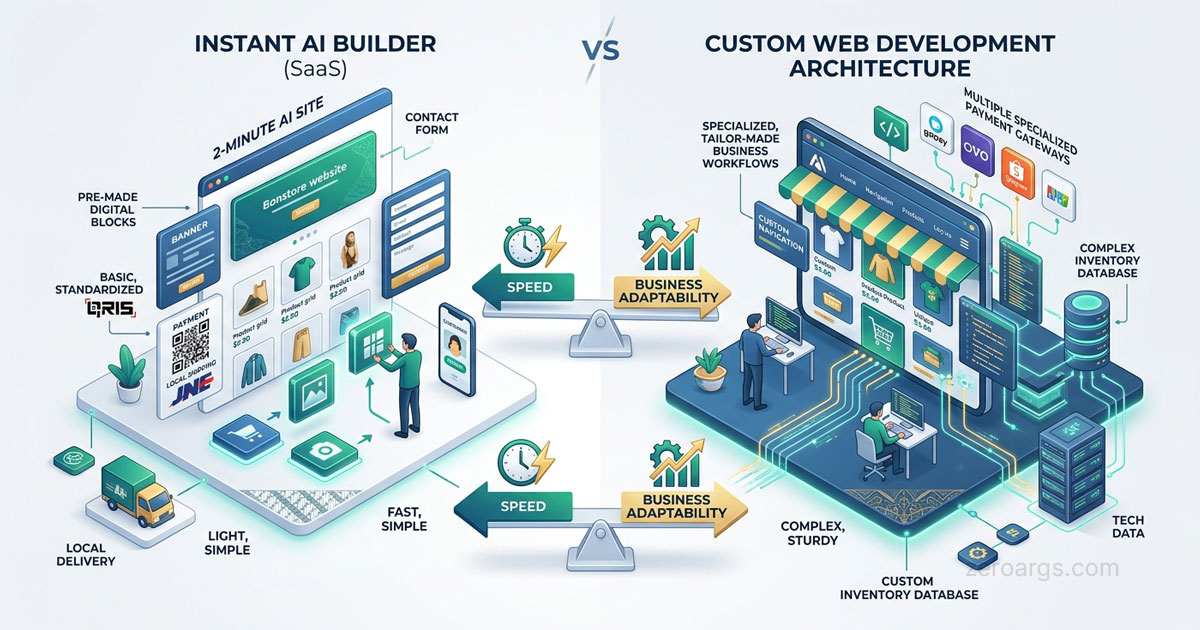
4. Headless vs monolith: a comparison for Indonesia
| Aspect | Monolith (Shopify, WooCommerce) | Headless commerce |
|---|---|---|
| Initial launch time | Fast — days to weeks | Slower — weeks to months |
| Design flexibility | Limited by themes/plugins | Nearly unlimited |
| Marketplace integration | Third-party plugins, often fragile | Custom APIs, more control |
| Monthly cost | Platform subscription + plugins | Hosting + engineering (can be lower long-term) |
| Data ownership | Data on vendor platform | Data on your infrastructure |
| Team required | Store admin, no developer | At least one developer or agency |
| Best for | Early-stage MSMEs, single channel | Multi-channel businesses, growing brands |
A pattern we see often in Indonesia: businesses start on a monolith, then move to headless when marketplace margins shrink and they need an owned channel without vendor lock-in. This transition does not have to be a big bang — you can run both in parallel during a phased migration.
5. Integrating Indonesia's ecosystem through APIs
Headless shines most when you connect multiple local systems:
Payments. Integrate Midtrans, Xendit, or Doku once in the backend. Every frontend — website, PWA, even payment links from chat — uses the same flow. Payment callbacks hit one endpoint; stock decrements through consistent rules.
Logistics. APIs from JNE, J&T, SiCepat, or aggregators like RajaOngkir are called from the backend at checkout. Customers see real-time rates without admins calculating per district manually.
Marketplaces. Although Tokopedia and Shopee do not offer full headless storefronts, you can sync catalog and inventory through seller APIs. Your backend remains the master; marketplaces become distribution channels, not the source of truth.
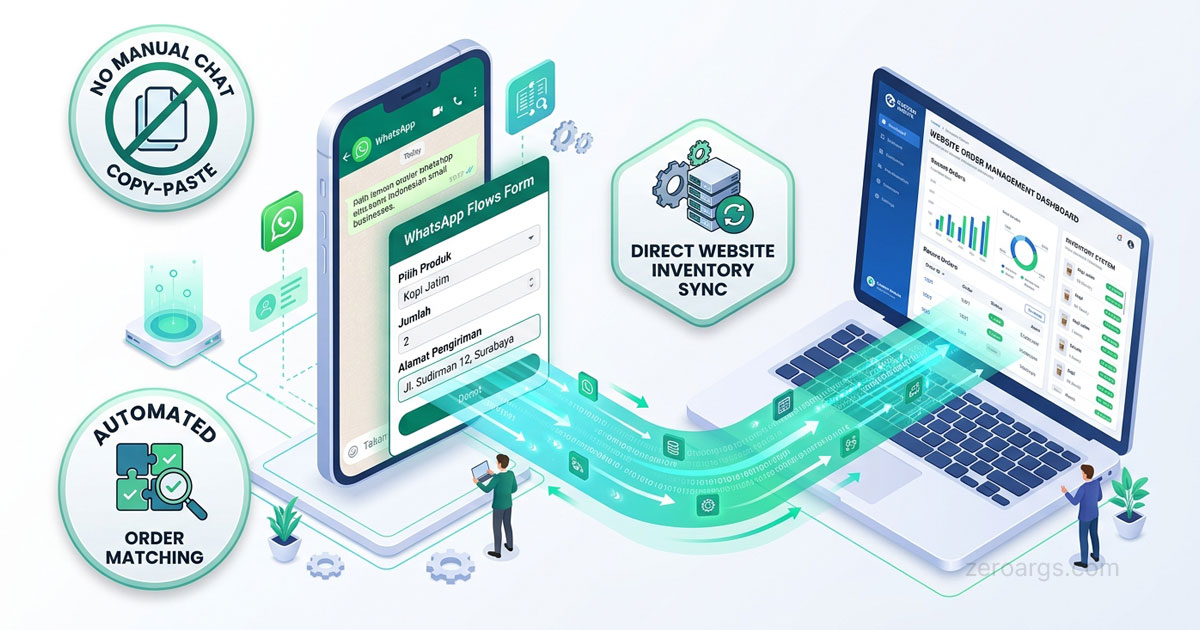
WhatsApp. Product catalogs can be generated from the same API that powers your website. When customers order through chat, admins or bots create orders through identical endpoints — avoiding duplicate data in separate spreadsheets.
Data compliance. If you store customer data yourself, Indonesia's Personal Data Protection Law (UU PDP) applies. Headless architecture simplifies audits because data is centralized, not scattered across five marketplace dashboards.
6. Concrete UMKM implementation examples in Indonesia
Headless feels abstract until you see patterns Indonesian MSMEs already use:
Fashion brand with web + WhatsApp catalog. An East Java clothing brand manages 120 SKUs (size and color). The backend stores stock once; a Next.js site shows seasonal lookbooks, while admins generate WhatsApp product lists from the same endpoint. Chat orders go through the identical POST /orders path as web checkout — no second stock spreadsheet.
Multi-outlet F&B with a menu API. A coffee shop with three outlets across Nganjuk–Kediri separates menus per location. The API returns price and availability by outlet; the internal POS and pre-order page share the same data. When one branch runs out of an ingredient, the backend status updates and every channel reflects it without editing three places.
Electronics seller syncing marketplace + owned store. A gadget reseller sells on Shopee, Tokopedia, and a branded website. A nightly worker pulls marketplace orders and adjusts master stock in the backend. The website always shows a safe remaining quantity; marketplaces get stock updates through seller APIs. Overselling drops because only one system may decrement inventory.
None of these patterns needs a full ERP — just a disciplined catalog/order backend plus frontends that match the channels customers actually use.
7. Realistic costs and a headless MVP roadmap
Investment in Indonesia in 2026 generally falls into three tiers:
Functional MVP (IDR 40–80 million). Backend + one web frontend + one payment gateway + one courier. Enough for 50–200 SKUs in 6–10 weeks.
Multi-channel operations (IDR 80–150 million). Adds marketplace sync, admin dashboard, order notifications, and basic reporting — for businesses above roughly IDR 200 million online revenue per month.
Mature platform (IDR 150 million+). PWA, multiple frontends, loyalty, ERP, and marketing automation for brands that treat digital as a core pillar.
Phased roadmap: months 1–2 backend + store + QRIS/VA; month 3 sync one marketplace; months 4–5 PWA or ops dashboard; month 6+ extra channels and analytics. Host in Jakarta (GCP asia-southeast2 or AWS ap-southeast-3); many teams use Vercel + Cloud Run to keep early costs down.
8. Common mistakes when adopting headless commerce
Building too much upfront. Start with a stable pay–order–ship flow before designing a full ERP.
No clear API contract. Document endpoints, error formats, and stock rules from day one or checkout regressions follow every design change.
Ignoring inventory sync. Without a single master, headless only moves overselling from spreadsheets to APIs.
Choosing headless for the trend. If one WooCommerce store works and you have no engineering capacity, complexity outweighs benefit.
Skipping ops tooling. Admins need a clear dashboard — not database access — alongside the storefront.
9. When hybrid — monolith plus headless — makes more sense
A hybrid pattern often works during transition:
- Monolith for blog, company profile, and SEO content.
- Headless backend for catalog, checkout, and operational integrations.
- Marketplace as acquisition — synced from the same backend.
This matches why Indonesian SMEs still need a website beyond marketplaces: marketplaces for discovery, owned channels for margin and customer data.
| Strategy | When to choose | Risk |
|---|---|---|
| Full monolith | Early stage, no developer on team | Vendor lock-in, limited integrations |
| Full headless | Multi-channel, established brand | Upfront cost, needs technical team |
| Hybrid | Transitioning from monolith, gradual growth | Temporary complexity of two systems |
Ready to map architecture? See our headless commerce service.
Conclusion
Headless commerce separates customer experience from your store’s operational engine so Indonesian businesses can sell on website, marketplace, WhatsApp, and mobile without doubling manual work. Benefits show when you have multiple channels, need data control, and can invest in a foundation that scales.
Start from real friction — unsynced stock, locked design, fragile integrations — not trending labels. If API-first fits, we at Zero Args Technology can help design a headless MVP with local payments, logistics, and marketplaces. Explore headless commerce, or start with website development in East Java / Nganjuk. Start a conversation with your channels and biggest bottlenecks.
Frequently asked questions
What is headless commerce?
Headless commerce separates the storefront (website, app, or WhatsApp catalog) from the backend that manages products, stock, pricing, and orders through APIs. One data source can power multiple sales channels.
When are Indonesian MSMEs ready for headless commerce?
Usually when you sell on three or more channels, stock must be aligned manually, or marketing needs to change the look without touching checkout. If online revenue is still small and one channel is enough, a monolithic platform is usually the better fit.
Do you have to build headless commerce from scratch?
No. Many businesses use a commerce engine such as Medusa or Saleor, or a custom backend, then add frontends that match the brand. What matters is a clear API contract and one source of truth for inventory.
How does headless integrate with QRIS and marketplaces?
Payment gateways like Midtrans or Xendit are integrated once in the backend. Marketplaces such as Tokopedia and Shopee become distribution channels synced from your backend as the inventory master.