- e-commerce
- engineering
- umkm
- mvp
Payment Gateway Integration for Indonesian Business Websites
Payment gateway integration for Indonesian business websites: choose Midtrans or Xendit, test sandbox webhooks, QRIS, VA, and go live without overselling stock.
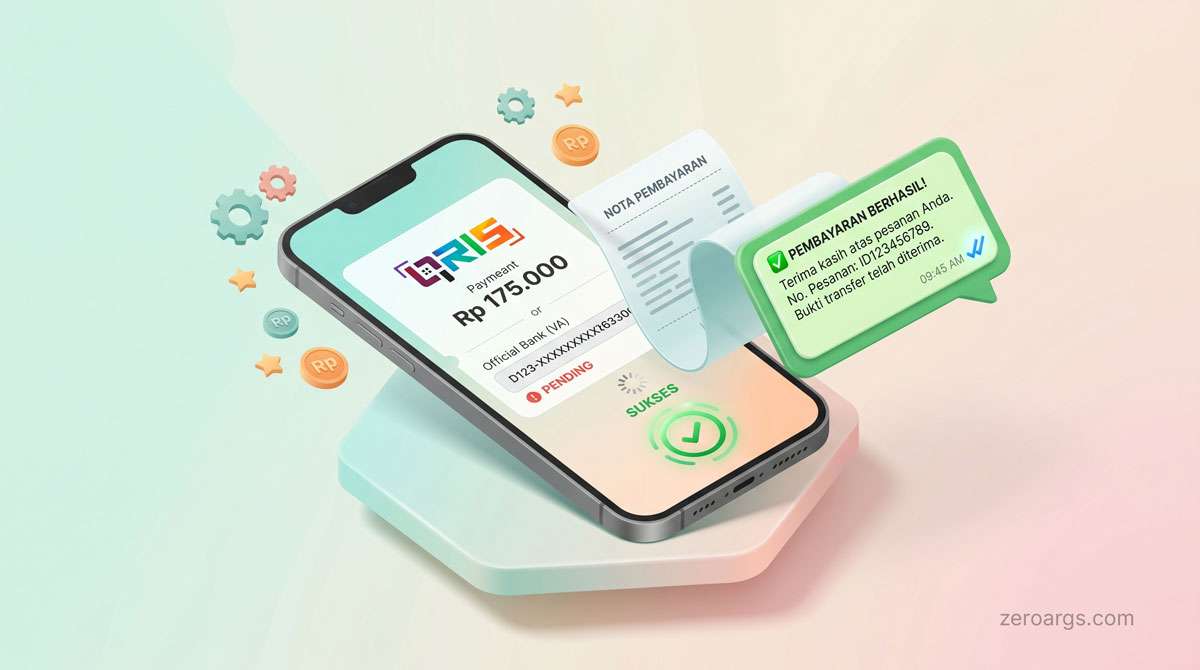
Payment gateway integration for Indonesian business websites is where many store projects stall: the "Pay now" button exists, but order status never updates after a customer scans QRIS or completes a virtual account transfer. In 2026, most MSMEs and startups do not need exotic payment architecture — they need an honest flow: create an order, hand off to a trusted payment page, accept a server notification, then decrement stock and send proof over WhatsApp without hours of manual reconciliation.
This article summarizes the technical decisions we apply when shipping custom checkout for businesses in East Java (including Nganjuk) and clients selling nationwide — not a dashboard click-through without security context.
1. When Your Site Actually Needs a Payment Gateway
Not every business needs Snap-style hosted checkout on day one. Three patterns we see often:
| Pattern | Fits when | Risk if forced too early |
|---|---|---|
| Static QRIS + manual confirm | Low volume, WA-led orders | Mismatched transfer proofs |
| Payment links (invoice) | Services, pre-orders, B2B | Weak automation for large catalogs |
| Integrated gateway checkout | Online catalog, limited stock, many methods | Setup cost + webhook QA |
If you already sell on Tokopedia, Shopee, or TikTok Shop, the marketplace handles settlement. An owned website makes sense when you want clearer margins, first-party customer data, or order flows that do not fit listing templates — see why Indonesian SMEs still need a website beyond marketplaces.
2. Choosing a Provider: Midtrans, Xendit, and Doku
These three names dominate integrations in Indonesia. The choice is usually about team familiarity and payment methods your buyers use, not abstract feature lists.
Midtrans — mature ecosystem, broad Snap/Core API docs, many community examples for Laravel/Node. Strong default when you want cards, virtual accounts, QRIS, and e-wallets in one Snap flow.
Xendit — strong for multi-bank virtual accounts, invoices, and disbursements; common with startups already on other Xendit products. Consistent REST + JSON webhooks for engineering teams.
Doku — still relevant in some verticals and legacy partnerships; consider when contracts or acquirers require it.
Practical criteria before signing:
- Per-transaction fees and settlement timing (when funds become available).
- Required methods for your audience: on-us QRIS, BCA/BRI/Mandiri/BNI VA, GoPay/OVO/DANA/ShopeePay.
- Sandbox quality and status simulators (settlement, expire, deny).
- Webhook reliability to your hosting region (see section 5).
3. Sandbox: What "Done" Means Before Production
A common mistake is calling integration finished once the payment redirect works. Our sandbox definition of done:
- Create an order with a merchant-controlled unique
order_idtied to your database. - Complete a payment using the provider's simulator.
- Receive at least one successful webhook (
settlementor equivalent). - Verify signature validation and idempotency (calling the endpoint twice must not double-allocate stock).
- Test failure paths:
expire,cancel,deny— UI and inventory must stay consistent.
Keep the Server Key on the backend only. The Client Key may appear in the browser for Snap, but never expose the Server Key in frontend code or public repositories.
4. Checkout Flow: Snap, Redirects, and Mobile UX
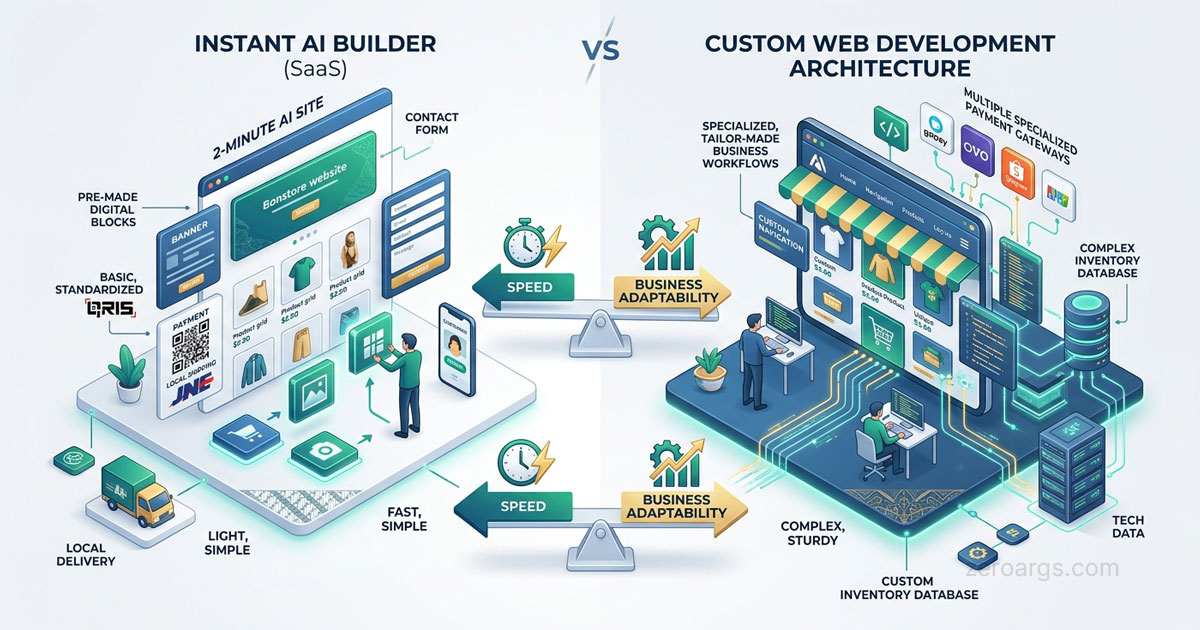
For most MSME sites, Midtrans Snap or Xendit Invoice/Checkout is enough: the backend creates a transaction; the frontend opens a hosted payment page. Benefits: lighter PCI scope and payment methods maintained by the provider.
UX principles for Indonesia:
- Show the final total including shipping before opening Snap — customers often abandon if the amount changes at the last step.
- After redirect back to your site, do not show "Paid" from query parameters alone; wait for webhook confirmation or bounded server-side status polling.
- On 3G networks, success pages should stay light (no autoplay video); this aligns with Core Web Vitals and SEO — see our AI search SEO strategy for Indonesian business websites.
Minimal flow (conceptual):
Browser → POST /api/orders → Backend creates order (pending)
Backend → Payment API → payment_token / redirect_url
Browser → Hosted payment page (QRIS / VA / e-wallet)
Provider → POST /webhooks/payment → Backend verifies signature → paid
Backend → decrement stock, notify WhatsApp, show receipt page
5. Webhooks: Signatures, Idempotency, and Hosting
Webhooks are the source of truth for payment status, not the "Thank you" page. For Midtrans, verification typically hashes order_id, status_code, gross_amount, and the Server Key with SHA-512 and compares it to signature_key. Reject unsigned or invalid requests; log failed attempts for audit.
Operational rules:
- Endpoints must be public HTTPS — localhost will not work; use a tunnel for local dev and update dashboard URLs when the tunnel changes.
- Return HTTP 200 quickly after enqueueing work; heavy tasks (email, stock, marketplace sync) belong in a queue.
- Store
transaction_id/payment_idand ignore duplicates with a unique database constraint. - Do not decrement stock on
pending; wait for the success state your finance team agrees on.
Deploying APIs near users reduces checkout and webhook latency. We often use GCP asia-southeast2 (Jakarta) or AWS ap-southeast-3; Singapore edge with a Jakarta API is also common.
Webhook and admin-panel security details are in our website security checklist for Indonesian businesses in 2026.
6. QRIS, Virtual Accounts, and E-wallets in Your UI
Indonesian buyers expect flexibility. On your site:
- Explain that they will be redirected to the provider's official page — this builds trust versus fake card forms.
- For QRIS, warn users not to close the tab before confirmation; offer a "I have paid" button that triggers status checks, not unverified manual claims.
- For VA, show bank code, exact amount, and expiry — wrong amounts are the top reason orders stall.
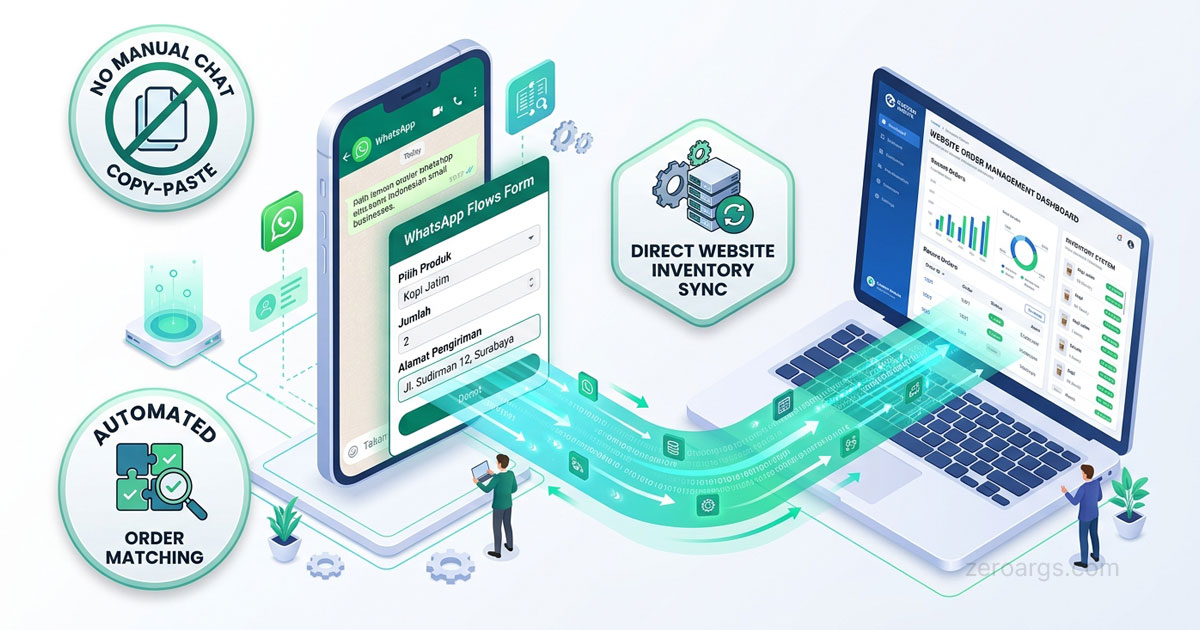
After success, send a summary to WhatsApp Business if that is your ops channel — messaging integration is separate from the gateway, but the flow should match our WhatsApp Business API practical integration guide.
7. Data Compliance and Daily Reconciliation
Gateways process payment data on your behalf. Your privacy policy should name them as processors — aligned with Indonesia's Personal Data Protection Law (UU PDP). Minimize card data in your logs; never store PAN/CVV.
Reconcile provider dashboards against your orders table daily. If you also sell on marketplaces, separate revenue sources to avoid double counting — see omnichannel order and inventory sync for Indonesian SMBs.
8. Quick Comparison and Go-live Checklist
| Aspect | Hosted Snap / checkout | Full custom Core API |
|---|---|---|
| Time to ship | Days–weeks | Weeks+ |
| Payment methods | Broad, provider-maintained | You assemble |
| Security risk | Lower | Higher |
| Best for | MSMEs, store MVPs | Dedicated engineering team |
Go-live checklist:
- Production notification URL configured in provider dashboard
- Server Key in a secret manager, not committed
.env - Webhook signature verified + duplicate delivery tested
- Failure statuses tested (expire/cancel)
- Privacy policy and data contact page updated
- Runbook: "customer paid, order still pending" (check webhook logs)
Build cost estimates (separate from gateway transaction fees) are covered in website development cost for Indonesian businesses in 2026.
Conclusion
Reliable payment gateway integration for Indonesian business websites is not a checkout button — it is a contract between orders, webhooks, inventory, and customer communication. Start in sandbox with failure scenarios, pick Midtrans or Xendit based on how your buyers pay, and treat redirect success as UX guidance, not final proof of payment.
If you want a store MVP with QRIS, virtual accounts, and tested webhooks for the Indonesian market — including deployment in the Jakarta region — see website development in East Java for payment-ready scope. Start a conversation with us. We begin from the order flow your team runs today, not a payment feature list from a brochure.