- ai
- engineering
- mvp
- startup
RAG for Indonesian Businesses: A Practical Guide Without Fine-Tuning
RAG for Indonesian businesses: connect internal docs to LLMs, MVP architecture, local hosting, Indonesia PDP Law compliance, and when custom builds beat SaaS.

RAG for Indonesian businesses — short for Retrieval Augmented Generation — is the architecture we recommend most often when clients want a chatbot or internal assistant that answers from their own SOPs, catalogs, and FAQs instead of a model's general training data. With national AI adoption accelerating and programs like the Google–Komdigi startup initiative, many teams want "custom AI" but are unsure whether to fine-tune a model, buy SaaS, or build a pipeline themselves.
This article explains when RAG makes sense, how the technical framework works at an engineering level, and what you need to keep answers accurate, auditable, and aligned with Indonesia's Personal Data Protection Law (UU PDP).
1. What RAG Is and Why It's Not Fine-Tuning
RAG combines two steps: retrieving relevant document chunks from your knowledge base, then generating an answer with a large language model (LLM) that uses those chunks as context. The base model does not need retraining every time product prices or shipping policies change — you update the documents and re-index.
That differs from fine-tuning, which changes model weights with a custom dataset. Fine-tuning is expensive, slow, and must be repeated when data changes. For most businesses in Indonesia — from SMEs with 50-page FAQs to startups with internal wikis — RAG offers a better balance of accuracy, cost, and deployment speed.
Another pattern often confused with RAG: prompt engineering alone without retrieval. That works for general questions but fails when answers must cite specific return policies, current price lists, or internal procedures that never appeared in public training data.
2. Use Cases That Make Sense for Indonesian Businesses
RAG is most valuable when you have structured or semi-structured documents that get asked about repeatedly. Examples we see in the field:
- Customer FAQs — shipping policies, sizing, warranties, payment via QRIS or virtual accounts.
- Internal knowledge bases — warehouse SOPs, CS playbooks, WhatsApp Business escalation templates.
- Product catalogs — descriptions, specs, and stock synced from your website or marketplaces (Tokopedia, Shopee, TikTok Shop).
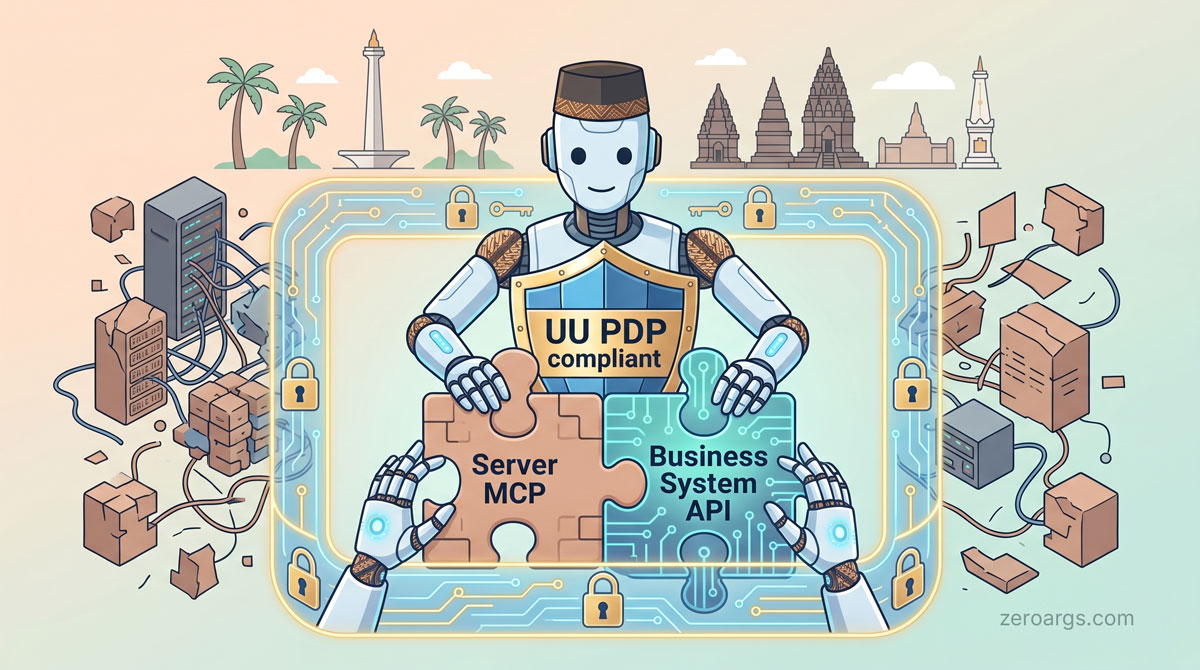
- Compliance documents — privacy policy summaries and personal-data handling procedures under UU PDP.
RAG is a weaker fit for tasks that require automated multi-step actions — for example, creating a refund and notifying logistics. For that, consider AI agents for business automation on top of a RAG foundation, not instead of it.
If your team is new to AI without in-house developers, start with simpler use cases in our AI adoption guide for Indonesian SMEs without an IT team before building a full RAG pipeline.
3. Pipeline Architecture: Ingest, Chunk, Embed, Retrieve, Generate
A production RAG pipeline — even for an MVP — typically has five stages. Understanding the flow helps you talk to developers or evaluate SaaS vendors.
Ingest — Collect sources: policy PDFs, FAQ pages in your CMS, catalog spreadsheet exports, or markdown from internal wikis. Normalize formats before processing.
Chunking — Split documents into small segments (typically 200–800 tokens) with slight overlap (10–20%). Chunks that are too large hurt retrieval precision; chunks that are too small lose context.
Embedding — Convert each chunk into a numeric vector with an embedding model. Store vectors in a vector database.
Retrieval — When a user asks a question, search for the most relevant chunks — often with hybrid search (vector similarity plus BM25 keyword search).
Generation — The LLM receives the question plus selected chunks and produces an answer. A good prompt instructs the model to answer only from context and to admit when information is missing.
A simple flow for a small team:
Question: "How long is delivery to East Java?"
  → Embed the question
  → Retrieve top-5 chunks from shipping FAQ
  → LLM: answer + cite source (e.g. "Shipping FAQ v3, page 2")
4. Choosing a Vector Database and Hosting Near Your Users
Infrastructure choices affect latency, cost, and data compliance. For Indonesian audiences, hosting in the Jakarta region reduces delay compared to US or European servers.
| Option | Best when | Notes for Indonesia |
|---|---|---|
| pgvector (PostgreSQL) | You already use Postgres/Supabase | One database for app + vectors; familiar to many teams |
| Pinecone / managed | You want speed without ops overhead | Check data location and vendor DPA |
| Qdrant / Weaviate self-hosted | You need full control | Deploy on GCP asia-southeast2 or AWS ap-southeast-3 |
| Chroma / local | Offline prototypes | Do not use in production without backup and access control |
If you are already weighing Supabase or Firebase for your backend, see our Supabase vs Firebase comparison — pgvector on Supabase is often the fastest path to an MVP RAG stack without adding another vendor.
5. Reducing Hallucinations: Hybrid Search, Citations, and Confidence Thresholds
Hallucination is the main weakness of raw LLMs. RAG reduces risk but does not eliminate it when retrieval fails or chunks are stale. Practices we apply on client projects:
- Hybrid search — Combine embeddings with BM25 so specific terms (product names, SKU codes, city names) are not missed.
- Source citations — Every customer-facing answer should reference a document or FAQ URL. This supports audit trails and builds trust.
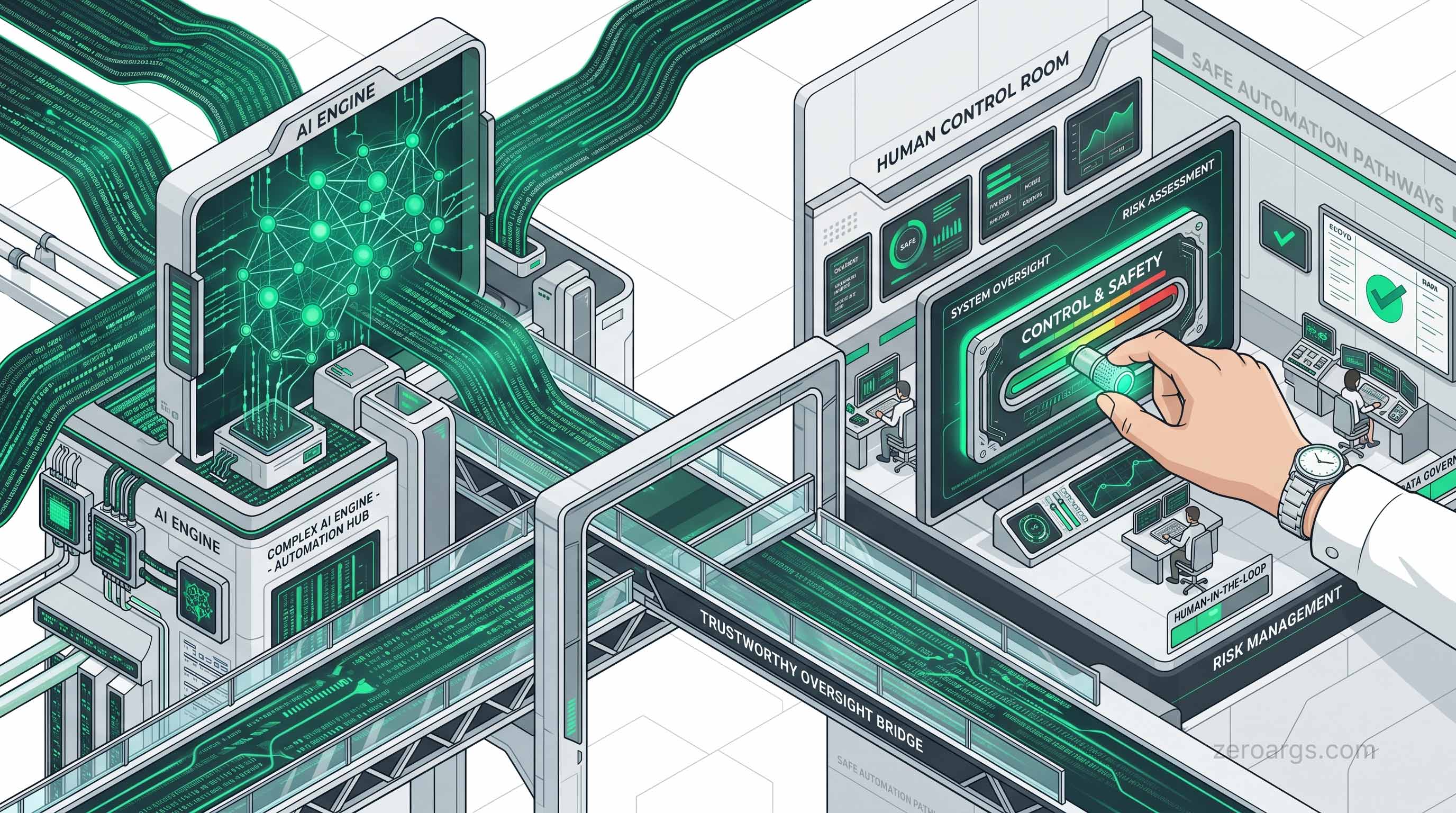
- Confidence thresholds — If similarity scores fall below a threshold, reply "I could not find that information" and escalate to a human — do not guess.
- Golden evaluation sets — Collect 30–50 real questions (anonymized) and measure accuracy whenever you change chunking, models, or prompts.
- Metadata filters — Restrict retrieval by category (e.g. "shipping" documents only) or user role (warehouse staff vs CS).
Without periodic evaluation, a RAG system that started accurate can degrade sharply after you change holiday-season pricing without re-indexing.
6. UU PDP and Data Security When Building RAG
RAG touches business data — and often customer data if chat logs are indexed. In Indonesia, the Personal Data Protection Law (UU PDP) requires clear processing purposes, access controls, and retention policies.
Minimum steps before go-live:
- Separate public and sensitive data — Shipping FAQs belong in RAG; per-customer sales summaries do not.
- Anonymize logs — Do not index phone numbers, full addresses, or bank accounts into an embedding corpus without a clear legal basis.
- Encryption in transit — All calls to embedding and LLM APIs must use HTTPS; consider at-rest encryption for the vector store.
- Inference logs — Who asked, which chunks were retrieved, what answer was sent — stored with limits and deletable on data-subject request.
- Vendor assessment — If data leaves Indonesia to US/EU clouds, document transfers and processing agreements.
See our practical UU PDP guide for web apps for more detail. If RAG is integrated into an app that processes user data, also confirm PSE registration obligations where applicable.
7. Build vs Buy: SaaS vs Custom MVP
Many platforms sell ready-made "AI knowledge base" products. Custom RAG makes sense when deep integration is required.
| Factor | SaaS (Notion AI, KB chatbots, etc.) | Custom RAG MVP |
|---|---|---|
| Time to production | Days–weeks | 2–6 weeks with a developer |
| Real-time stock/order integration | Limited | Full via internal APIs |
| Monthly cost | IDR 500K–5M | Hosting + API tokens IDR 1–10M |
| Data control & UU PDP | Vendor-dependent | You design it |
| Bahasa Indonesia quality | Varies | You choose models + evaluate NLU |
For SMEs with static FAQs under 100 pages, SaaS is often enough. For businesses with thousands of SKUs, multiple channels, and real-time stock checks from internal databases, custom RAG on your website or app is usually cheaper over 12–18 months.
Broader integration patterns — webhooks, APIs, application architecture — are covered in our practical AI integration guide. If RAG needs to call external tools (check orders, create tickets), see Model Context Protocol as an emerging connection standard.
8. Comparison: Prompt-Only, RAG, Fine-Tuning, and Agents
| Approach | Upfront cost | Data updates | Accuracy on internal docs | Hallucination risk | Best for |
|---|---|---|---|---|---|
| Prompt only | Very low | N/A | Low | High | Internal brainstorming |
| RAG | Medium | Re-index documents | High | Medium (with evaluation) | FAQs, SOPs, catalogs |
| Fine-tuning | High | Retrain | Medium–high | Medium | Custom tone, classification |
| Agent + RAG | High | Re-index + tools | High | Medium–high | Multi-step automation |
A rollout order we often recommend: start with narrow RAG on one FAQ category → add hybrid search and evaluation → only then consider agents for automated actions once answer quality is stable.
Conclusion
RAG for Indonesian businesses is the most practical way to connect LLMs to company knowledge without the cost and complexity of fine-tuning. Focus on documents that are actually asked about often, build an ingest–retrieve–generate pipeline with regular evaluation, and treat UU PDP compliance as part of the design from day one — not an afterthought after an incident.
If you already have clean FAQs or catalogs but need help building RAG into your website, WhatsApp, or internal app with hosting in the Jakarta region, start a conversation with us. We help businesses in Indonesia design AI solutions that are measurable — not demos that burn API costs without operational impact.