- umkm
- e-commerce
- engineering
- mvp
Sapa UMKM Marketplace 2026: Business Integration Guide
Sapa UMKM marketplace 2026 guide: PaDi UMKM integration status, product catalog prep, multi-channel strategy with your own website, and 50% marketplace fee incentives.

In August 2026, Indonesia's Ministry of MSMEs announced an acceleration of the Sapa UMKM marketplace — a local e-commerce channel integrated with Telkom's PaDi UMKM platform. The feature has been built and is undergoing phased integration, though no full launch date has been set. For business owners in Nganjuk, Surabaya, or anywhere in Indonesia, the question is no longer "will this happen?" but "what product data and operations should I organize so I'm ready when the door opens?"
This article covers the latest status of the Sapa UMKM marketplace, how it differs from ION and commercial marketplaces, and an engineering playbook for preparing multi-channel catalogs without waiting for the official launch.
1. What Is the Sapa UMKM Marketplace — and Where It Fits in the Ecosystem
Sapa UMKM is already known as a unified superapp: NIK/NIB-based registration, legality, financing, training, and digital bookkeeping. The next phase is a domestic marketplace — a transaction space where verified MSMEs can sell and the general public can buy.
Three entities are often confused, but each plays a different role:
| Entity | Primary role |
|---|---|
| Sapa UMKM | Identity, verification, government services, and MSME marketplace (in development) |
| PaDi UMKM | Telkom's BUMN procurement platform — gateway to institutional supply chains |
| ION (Indonesia Open Network) | Interoperability infrastructure: catalogs, payments, and logistics across apps |
The Sapa UMKM marketplace does not replace Shopee or Tokopedia. It is an additional channel with lower positioned fees for onboarded MSMEs — plus access to institutional markets through PaDi integration. ION architecture is covered in our Indonesia Open Network guide; this article focuses on what you can prepare today.
2. Latest Status — August 2026: Feature Built, PaDi Integration Underway
The latest news from the Ministry of MSMEs (August 12, 2026) states:
- The marketplace feature has been built and is being integrated with PaDi UMKM.
- Full launch waits on mass onboarding — the government wants most MSMEs in the system before the marketplace goes fully live.
- The platform is not seller-only; the general public can also transact as buyers.
- Cross-ministry integration (halal, BPOM, PIRT, regional governments) is still rolling out in phases.
Translation: you still have preparation time, but not time to sit idle. Sellers with clean catalogs will onboard faster when transactions open — similar to commercial marketplace patterns, but with a government verification layer upfront.
3. Why 12 Million Are Registered but Only 15,000 Are Active
Of roughly 12 million MSMEs in the database, only 15,000 actively use Sapa UMKM services as of August 2026. This gap is not just an awareness problem — the operational roots run deeper:
- Half-finished business profiles (NIB not linked, inconsistent addresses).
- No immediate incentive felt today — the marketplace has not opened full transactions.
- Android-only app limits desktop-first sellers.
- Product data not ready, so there is no reason to return after registration.
If you registered but went inactive, the first two weeks are enough to: complete verification, enable digital bookkeeping, and organize your master catalog. Basic registration is covered in our Sapa UMKM integration guide; this article continues into the product and sales-channel layer.
4. Product Data to Organize Before the Marketplace Opens
Every marketplace — government or commercial — starts with a catalog. Without consistent SKUs, prices, and photos, technical onboarding stalls even if your account is verified.
At minimum, collect:
| Field | Why it matters |
|---|---|
| Unique SKU | Foundation for cross-channel stock sync |
| Consistent product name | Search on marketplaces and Google |
| Base price (COGS + margin) | Avoid overselling when the 50% discount goes live |
| Weight and dimensions | Automatic shipping calculation |
| Quality photos (min. 800×800 px) | Conversion on digital storefronts |
| Current stock | Prevent failed orders across channels |
| Product certifications | PIRT, halal, BPOM — relevant for certain categories |
Store this in one place — a structured spreadsheet, simple database, or website CMS — as your source of truth. Do not let Shopee, Instagram, and paper notes each hold a different version.
Example minimal master catalog structure:
sku: "SNK-KRIUK-250"
name: "Original Cassava Chips 250g"
sale_price: 18000
weight_grams: 280
stock: 150
category: "Snacks"
certifications: ["PIRT-3521012345678"]
main_photo: "/products/cassava-chips-250g.jpg"
The exact Sapa UMKM marketplace format may differ at launch, but the data foundation is the same as what you need for your website, Tokopedia, or an ION feed.
5. Your Website vs. the Government Marketplace: A Dual-Channel Strategy
A common mistake: assuming the government marketplace will replace your website. They solve different problems.
The Sapa UMKM marketplace gives you:
- Access to buyers looking for verified MSME products.
- Lower service fee incentives (including 50% marketplace fee discounts for registered MSMEs).
- A path to BUMN procurement through PaDi.
- Government verification credibility.
Your own website gives you:
- Full control over branding, policies, and customer data.
- Organic SEO and landing pages for ad campaigns.
- Privacy policy pages compliant with Indonesia's Personal Data Protection Law (UU PDP).
- Flexible payment integration (QRIS, virtual accounts, Midtrans/Xendit) without waiting for app features.
A realistic strategy for businesses in East Java and beyond: sell on Shopee/Tokopedia for volume, register on Sapa UMKM for programs and the domestic marketplace, and maintain a website as your official reference. Three channels, one product data source.
6. Multi-Channel Catalog Sync: An Engineering Approach
When the Sapa UMKM marketplace, PaDi, and commercial channels run in parallel, the biggest problem is not uploading photos — it is desynchronized stock. Orders arrive in three places, stock runs out on one channel, overselling happens on another.
A phased approach realistic for MSMEs without an IT team:
Phase 1 — Structured manual (weeks 1–2):
- One master spreadsheet with a current-stock column.
- Rule: every incoming order reduces stock in the spreadsheet before you confirm to the buyer.
- Update commercial marketplaces once or twice daily.
Phase 2 — Website as hub (weeks 3–4):
- Product catalog on your website with updatable stock.
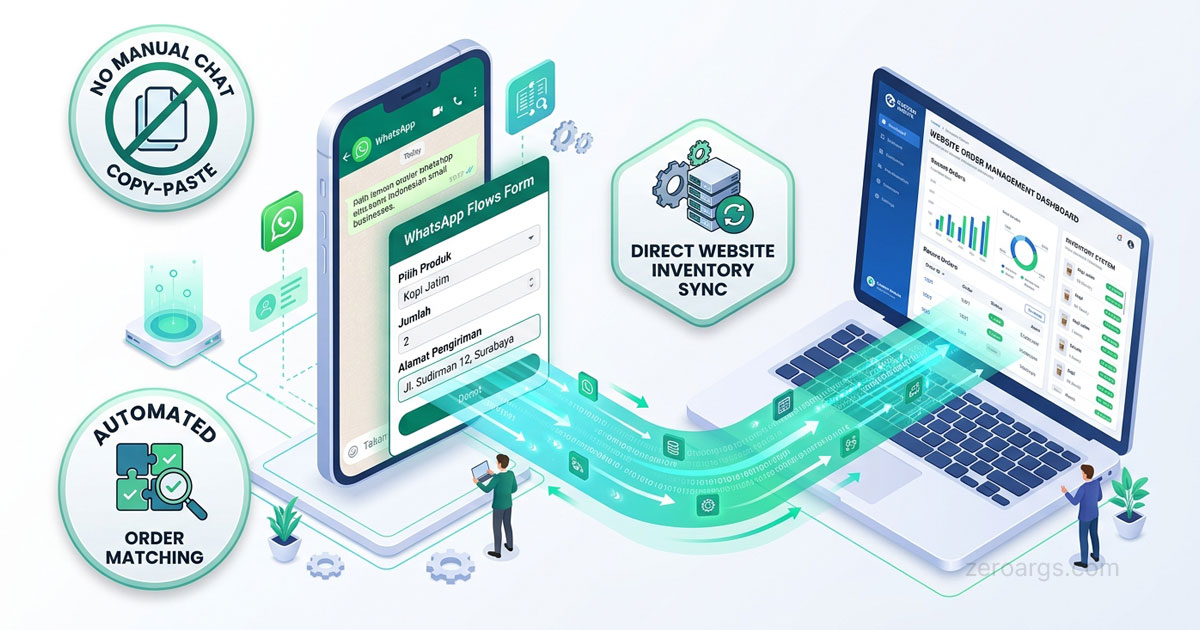
- Order form or WhatsApp Business API integration for automatic notifications.
- CSV export from your website when bulk upload opens on marketplaces.
Phase 3 — Light automation (month 2+):
- Payment gateway webhooks mark orders paid and reduce stock.
- Simple scripts or no-code services to push stock to channels that support APIs.
- Prepare catalog endpoints for when Sapa UMKM or ION opens seller integration.
The key point: do not wait for official APIs to start organizing data. Sellers with structured catalogs always onboard faster on every new platform — including live commerce and the domestic marketplace.
7. Use the 50% Fee Discount — Without Eroding Margin
The government offers a 50% marketplace service fee discount for MSMEs registered on Sapa UMKM. The incentive is attractive, but only meaningful if you know margin per channel.
Before relying on the discount:
- Calculate COGS per SKU — raw materials, packaging, average shipping, and operating costs.
- Compare effective commission — commercial marketplaces (8–15% + ads) vs. Sapa UMKM marketplace (with discount).
- Set base prices on your website — reference pricing independent of platform promotions.
- Record transactions per channel — digital bookkeeping in Sapa UMKM only helps when numbers match your bank account. See our digital bookkeeping guide for Indonesian SMBs.
A 50% discount is not a reason to lower your selling price — it is a reason to open a new channel without eroding the margin you already protect on commercial marketplaces.
8. Comparison Table: Commercial Marketplace vs. Sapa UMKM vs. Your Own Website
| Aspect | Commercial marketplace | Sapa UMKM marketplace | Your own website |
|---|---|---|---|
| Service fees | 8–15% commission + ads | Positioned lower; 50% discount for registered MSMEs | Hosting + domain; no per-transaction commission |
| Discovery | High (millions of active buyers) | Moderate (growing; verified MSME focus) | Low initially; SEO takes time |
| Seller verification | Basic (ID, bank account) | Full (NIB, OSS, integrated certifications) | You decide |
| Customer data | Locked to platform | Limited to platform transaction data | Fully yours |
| BUMN/institutional access | Difficult | Integrated via PaDi UMKM | Possible via direct tenders |
| Branding control | Platform templates | Government app templates | Full control |
| Setup time | Hours (manual listing) | Days (verification + catalog) | Weeks (website MVP) |
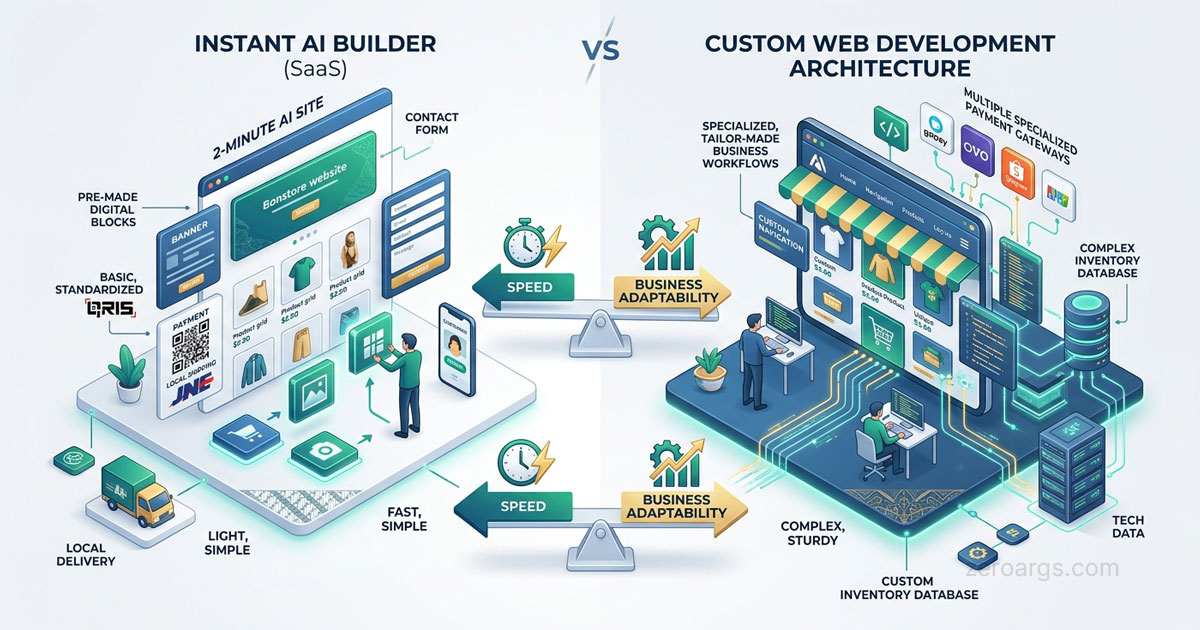
There is no single winner. MSMEs that survive in 2026 typically use all three with one product data source.
Conclusion
The Sapa UMKM marketplace is not a threat to your digital strategy — it is a channel expansion with government incentives that most businesses have not yet captured. The feature is built, PaDi integration is underway, but only sellers with structured catalogs, consistent legality data, and a website as reference will capture full value when transactions open.
Start with master product data, complete your Sapa UMKM profile, and prepare a minimal website aligned with your NIB and OSS. If you need help building a multi-channel catalog, QRIS payment flows, or an MVP website ready to grow into the domestic marketplace, start a conversation with us — we begin from operational problems, not a dangling feature list.
Frequently asked questions
What is the Sapa UMKM marketplace?
The Sapa UMKM marketplace is a local e-commerce feature being developed inside Indonesia's Ministry of MSMEs Sapa UMKM app. It enables verified MSMEs to sell products and allows the general public to purchase, with integration to Telkom's PaDi UMKM platform for BUMN and institutional supply chains.
When will the Sapa UMKM marketplace fully launch?
As of August 2026, the marketplace feature has been built and is undergoing integration with PaDi UMKM. The MSME Minister has not set a full launch date because cross-ministry integration is still rolling out in phases. Businesses are advised to complete onboarding and organize their product catalogs now.
What is the difference between Sapa UMKM, PaDi UMKM, and ION?
Sapa UMKM is the government's unified superapp for MSME identity, legality, and financing. PaDi UMKM is Telkom's BUMN procurement platform. ION (Indonesia Open Network) is open digital commerce infrastructure connecting marketplaces, payments, and logistics without locking sellers into a single platform.
Will the Sapa UMKM marketplace replace Shopee or Tokopedia?
No. The Sapa UMKM marketplace is positioned as an additional channel with more competitive service fees for verified MSMEs. Shopee, Tokopedia, and TikTok Shop remain relevant for discovery and sales volume. Your own website stays important as a long-term asset you fully control.
How do I prepare a product catalog for the Sapa UMKM marketplace?
Build master product data with unique SKUs, consistent names, base prices, shipping weights, quality photos, and current stock levels. Use your website or a structured spreadsheet as the source of truth, then export to whatever format the marketplace requires. Ensure data aligns with your NIB and OSS profile in Sapa UMKM.