- umkm
- e-commerce
- marketplace
Shopee Shipping Protection Fee Rises to Rp520: Stay or Exit?
Shopee's Hemat Biaya Kirim fee rises to Rp520 per order on December 1, 2026. Learn the breakeven math and decide to stay, exit, or shift channels.
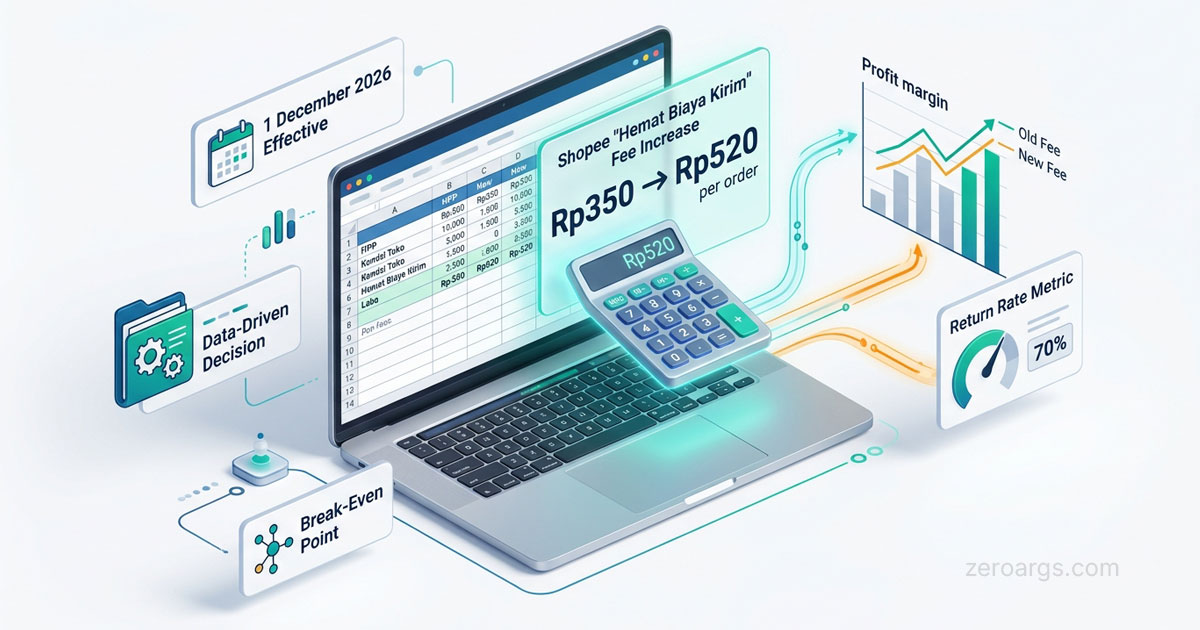
Starting December 1, 2026, the fee for Shopee's Hemat Biaya Kirim (shipping protection) program rises from Rp350 to Rp520 per delivered and completed order. The official notice is two lines long, but it touches every parcel you ship during the busiest quarter of the year. Because the program is optional, you face a real decision before the effective date: stay enrolled, exit, or restructure your pricing. This article gives you the calculation, not a group-chat opinion — a breakeven point built from your own store's return data.
What changes on December 1, 2026
Shopee is updating several optional seller programs in the same window. The ones that matter for your margin:
| Program | Change | Applies to |
|---|---|---|
| Hemat Biaya Kirim (shipping protection) | Rp350 → Rp520 per delivered and completed order (VAT included), a Rp170 increase | All enrolled sellers, from Dec 1, 2026 |
| Gratis Ongkir XTRA (free-shipping program) | Updated per-category program fees | Non-Shopee Mall sellers from Dec 1, 2026; Shopee Mall from Jan 1, 2027 |
| Shopee Ads (ad-user special promo) | Minimum net ad spend rises from 3% to 4% of sales for the special ad-user rates | Non-Mall from Dec 1, 2026; Mall from Jan 1, 2027 |
All of them remain optional — you can join and leave at any time through Seller Centre. But "optional" does not mean neutral: each program moves money between a certain cost and a risk. Shipping protection is the purest case, because it grants no extra exposure at all; its function is purely insurance.
What the program actually covers
The healthiest way to frame the program: you pay a premium per order, and in return return-shipping costs caused by seller fault are waived. The details:
- Coverage: the return-leg shipping cost (and in some cases the original outbound leg) for returns filed under seller fault, capped at Rp300,000 per order, covering both the initial shipping and the return.
- Automatic claims: shipping costs are adjusted by the system without a manual claim process.
- Not covered: returns where the buyer simply changes their mind, damaged items, and lost parcels — these have separate appeal routes and sit outside this premium.
- Eligibility: no digital products, a store in normal standing, a main account (not a sub-account), and no cross-border sellers.
Note the distinction sellers most often get wrong: the program does not save you money on everyday shipping, and it does not improve product ranking. It moves exactly one variable — the frequency of seller-fault returns. That makes the decision purely mathematical.
The breakeven math: when the program pays off and when it leaks
The formula is simple. The program is worth it when the expected benefit per order exceeds the premium:
Expected benefit = seller-fault return rate × average return shipping cost
Join if:  expected benefit > Rp520
Average return shipping cost means the combined outbound and return postage you would absorb without the program. For regular domestic shipments on Java, that combination often lands between Rp30,000 and Rp50,000; shipments to outer islands run higher. Use Rp40,000 as the working example:
- Breakeven = Rp520 ÷ Rp40,000 ≈ 1.3% of orders.
- If only 5 of every 1,000 completed orders result in a seller-fault return (0.5%), your expected benefit is 0.005 × Rp40,000 = Rp200 per order. You are paying a Rp520 premium for Rp200 of protection — a Rp320 leak per order.
- If your seller-fault return rate is 3% (plausible in fashion categories with heavy size variance), the expected benefit is 0.03 × Rp40,000 = Rp1,200 per order. The program clearly pays.
| Seller-fault return rate | Expected benefit (Rp40,000 shipping) | Rp520 premium | Sound decision |
|---|---|---|---|
| 0.5% | Rp200 | Rp520 | Exit, self-insure |
| 1.3% | Rp520 | Rp520 | Breakeven, either way |
| 3.0% | Rp1,200 | Rp520 | Stay enrolled |
The Rp170 increase also moves the breakeven line. Under the old Rp350 premium, the threshold in the example above was roughly 0.9%; under Rp520 it rises to 1.3%. Sellers who were comfortably in profitable territory can be pushed into breakeven territory by this change alone.
Store scale matters for the absolute number, too. A store completing 500 orders per month absorbs an extra Rp85,000 per month; at 1,000 orders, Rp170,000 per month. That is not a large figure, but on thin UMKM margins, Rp170,000 can equal an entire day's profit.
Reading your own return data in Seller Centre
Every variable in the formula above lives in your own data, not in anyone's article:
- Open the order and return details in Seller Centre and filter for the last 3–6 months so seasonal effects are represented.
- Compute your seller-fault return rate: returns filed under seller fault divided by completed orders. Do not use your total return rate — buyer's-remorse returns are not covered by the program.
- Estimate average return shipping: take your courier rates (JNE, J&T, SiCepat, and others) for your store's median parcel weight, then add the forward-plus-reverse scenario.
- Model it in the Fee Calculator: Seller Centre's built-in fee calculator includes the shipping protection program as a cost component. Fill in your own return figures rather than defaults.
One caveat: if your seller-fault return rate is high for a fixable reason — vague size descriptions, misleading color photos, weak packing — fix the cause first. Cutting the rate from 3% to 1.5% saves far more than any decision about this program, and once it drops, revisit the program decision with fresh numbers.
Three available decisions: stay, exit, or reprice
| Option | When it makes sense | What to do |
|---|---|---|
| Stay enrolled | Seller-fault returns above ~1.3% (at Rp40,000 combined shipping), or categories prone to size/quality disputes | Confirm automatic claims appear in your income details; review quarterly |
| Exit before Dec 1, 2026 | Seller-fault returns below breakeven; margins already squeezed by commission hikes | Leave via Seller Centre (Shipping Settings → Hemat Biaya Kirim → Exit); record the date so no new orders carry the new rate |
| Reprice / bundle | Moderate return rate but high average return shipping (outer islands, bulky goods) | Raise prices or add a small packaging fee; or steer return-prone buyers to a channel with your own return rules |
One operational detail is easy to miss: enrollment applies to orders placed after you join. If you exit before December 1, check that no in-flight orders still carry enrolled status, and keep a record of the status change.
Other fees rising in the same window
The Rp520 decision should not be read in isolation, because Shopee sellers in Indonesia face layered cost increases this quarter:
- Gratis Ongkir XTRA: per-category program fees are updated for non-Mall sellers from December 1, 2026 and Shopee Mall from January 1, 2027; rates range from 1.00% to 8.00% for regular-size products, higher for special sizes.
- Ads: for the ad-user special rates, the minimum net ad spend rises to 4% of sales.
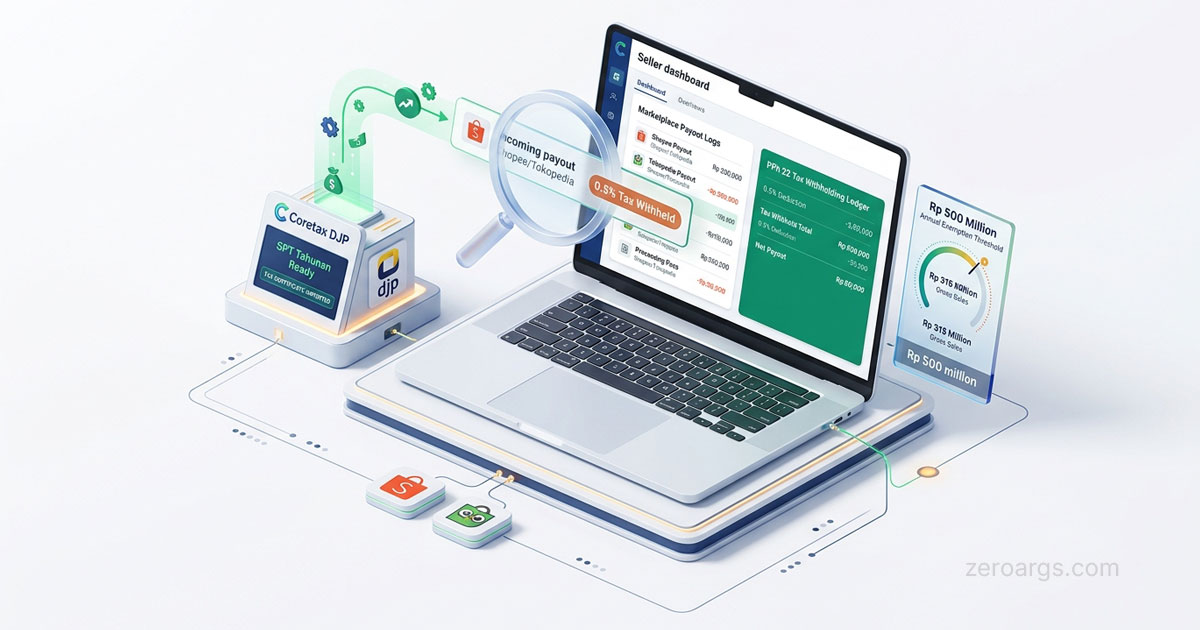
- Marketplace income-tax withholding (PPh Pasal 22): since October 1, 2026, four appointed marketplaces — including Shopee — withhold 0.5% of gross transaction value, with an exemption for individual sellers up to Rp500 million in annual turnover who file the required statement letter.
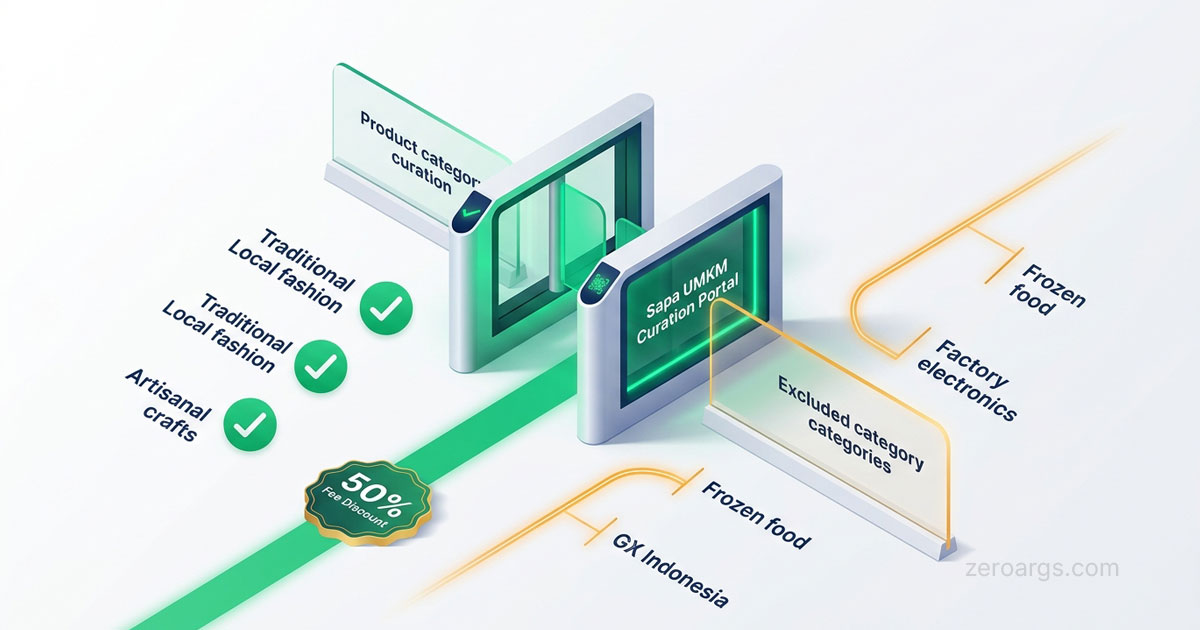
- The 50% Sapa UMKM discount: effective October 25, 2026, the discounted components are administration fees, commissions, or the base shop application fee. Optional program fees such as shipping protection and Gratis Ongkir XTRA are not among the listed components, so do not count them as discounted.
The healthy sequence: open one month of order income details, list every deduction line top to bottom, flag which ones rise on December 1, then recalculate your net margin per order at the new rates. If you do not yet have a per-order margin model, start with the net margin comparison for marketplace vs website sellers and adapt it to Shopee's current fee structure.
Preparing a second channel before peak season
A recurring fee increase is a structural signal, not a one-off incident. As long as 100% of your sales sit on a platform, every cost decision lives in the platform's hands — including the optional ones, because leaving a program means absorbing return risk at full postage rates.
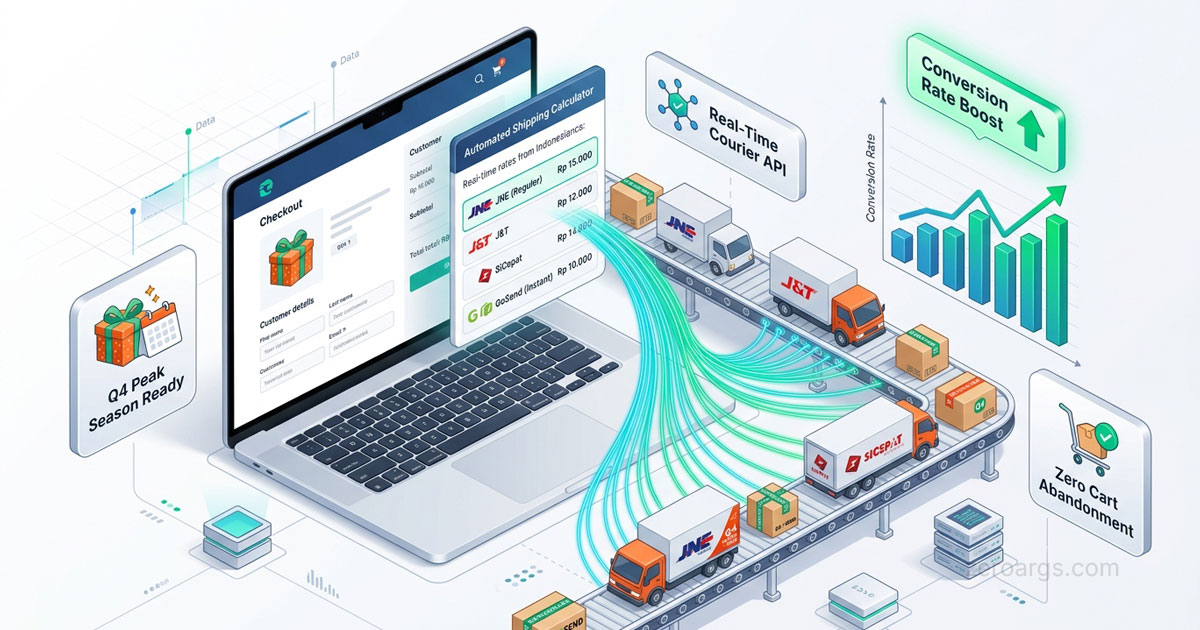
A second channel changes that bargaining position. On your own website, you set shipping rates per region, you write the return policy, and no optional-program premium applies per order. If you are weighing building one, start with website development services to understand the scope and investment, then read the shipping and courier integration guide for SME websites so real-time rates and tracking are ready before the 11.11 sale and Harbolnas on December 10. The broader dual-channel strategy is covered in the owned-channel playbook for Indonesian SMEs.
For UMKM sellers verified under Sapa UMKM, the marketplace channel is still worth keeping — the 50% commission discount makes it competitive again. The point is not to migrate entirely; it is to have options. A store with two channels absorbs platform fee hikes without eroding its margin, because some orders carry no platform deduction at all.
Conclusion
Shopee's shipping protection fee rises to Rp520 per order on December 1, 2026, and the right answer is not loyalty to the program — it is your own numbers: seller-fault return rate multiplied by average return shipping cost. Above breakeven, the program is fair insurance; below it, you are paying a premium for a risk you barely carry. Spend an hour this week opening your return data in Seller Centre, compute the breakeven, and decide before the new rate takes effect — peak season is the wrong time to restructure costs impulsively.
If the math shows your margin steadily leaking to platform fees, that is the signal to build a channel whose costs you control. We at Zero Args Technology build online-store websites with shipping, payment, and tracking integrations that work from day one. Start a conversation to discuss your store's needs before the peak season fully kicks in.
Frequently asked questions
What does Shopee's Hemat Biaya Kirim program cost from December 2026?
From December 1, 2026, the fee becomes Rp520 per delivered and completed order, VAT included, up from Rp350 previously.
Is the Shopee shipping protection program mandatory?
No. It is optional, and sellers can join or leave at any time through Seller Centre under Shipping Settings.
What is the cap on return shipping the program covers?
Up to Rp300,000 per order, covering the original outbound shipping and the return leg for returns caused by seller fault.
How do I decide whether the program is worth it?
Compare Rp520 against your seller-fault return rate multiplied by your average return shipping cost. With a combined return shipping cost of Rp40,000, breakeven sits near 1.3 percent of orders; below that, exiting is cheaper.