- umkm
- e-commerce
- engineering
- mvp
Marketplace to Website Customer Migration Funnel
Guide to building a marketplace-to-website customer migration funnel for Indonesian SMEs—data model, incentives, technical flows, and metrics without losing marketplace revenue.

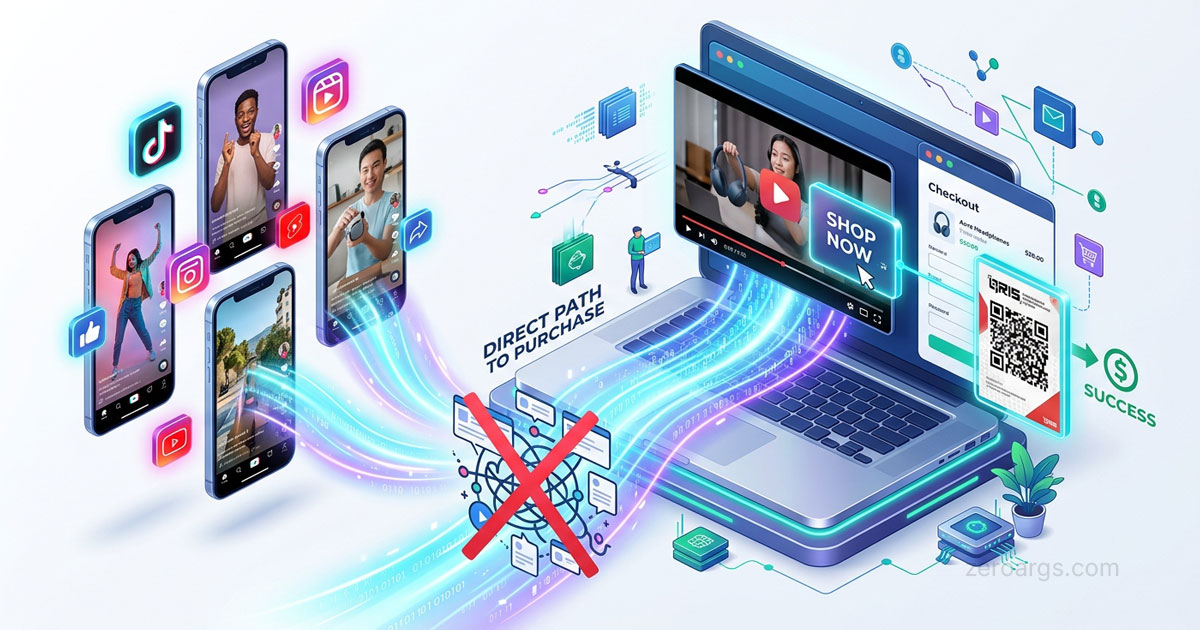
A marketplace-to-website customer migration funnel is not about closing your Shopee or TikTok Shop store and hoping traffic appears on its own. In 2026, headlines about local brands "leaving marketplaces" reveal a more nuanced pattern: successful sellers are not exiting platforms entirely—they are shifting repeat orders to channels with healthier margins while marketplaces remain acquisition engines. This article explains how to build a migration funnel a small team can operate—from customer data models and incentives to technical flows on your website.
If you are still mapping each channel's role, start with our owned channel strategy for Indonesian SMEs. Here we focus on the migration mechanism: how first-time marketplace buyers are systematically guided toward a second transaction on your website or WhatsApp.
1. Why 2026 Is the Moment to Engineer Migration
Several demand signals make migration funnels more urgent than before:
- Platform costs are rising — commission, admin fees, and algorithm ads on Shopee, Tokopedia, and TikTok Shop increasingly feel like an unpredictable digital tax.
- A 50% service-fee discount for verified micro and small businesses through Sapa UMKM frees margin that should fund owned-channel infrastructure—not flow straight back into ads.
- Local brands are diversifying — Indonesia's E-Commerce Association (idEA) and the Ministry of Trade see hybrid commerce growing: marketplaces for discovery, websites for branding and customer data.
- Customer data is locked in — you cannot export buyer databases from marketplaces; the only way to own first-party data is to collect it yourself after each transaction.
For SMEs in Nganjuk, Kediri, Surabaya, or other East Java cities, a migration funnel does not require an enterprise team. What you need is an operational decision: after which transaction do you want customers to move to your website?
2. Marketplaces for Acquisition, Websites for Repeat Orders
The channel role framework we use with clients:
| Role | Marketplace / social commerce | Website + WhatsApp |
|---|---|---|
| Target transaction | First (discovery) | Second and beyond (repeat) |
| Strength | Instant traffic, checkout trust | Better margin, data you own |
| Typical cost | 10–30% per transaction | 2–3% payment gateway + hosting |
| Customer data | Limited, platform-owned | First-party with UU PDP consent |
Marketplaces are not the enemy—they are the acquisition engine. Your website is the business home where repeat orders, corporate packages, and thin-margin marketplace SKUs can sell without one-click discount races.
A common mistake: moving the entire catalog to a website at once and waiting for organic traffic. A safer approach: start with best sellers and repeat-order SKUs while marketplaces stay active for discovery products.
3. Minimum Data Model for Cross-Channel Identity
Migration funnels fail when customer data is messy. Before choosing tools, make sure every transaction—marketplace, website, or manual WhatsApp—stores at least:
- Normalized phone number (
+62format, no random spaces) as the primary identity. - Customer name and shipping city.
- SKU or category purchased, not just the rupiah total.
- Transaction date and channel (
shopee,tokopedia,website,whatsapp). - Marketing consent status (checkout checkbox or an "OK" reply on WhatsApp).
In Indonesia, email is rarely the identity key. Phone numbers are the foundation of the customer profile your migration funnel will use. A minimal structure:
customer_id: "cust_00821"
phone: "+6281234567890"
first_order_at: "2026-08-01"
first_channel: "shopee"
migrated_at: "2026-08-18"
second_channel: "website"
consent_marketing: true
migration_source: "packaging_qr"
You do not need a perfect system on day one. What matters is one row per customer, not five duplicates because phone formats differ. If you are already considering a customer data platform, migration is the first use case that proves whether unified data is worth the effort.
4. Packaging and Post-Delivery Touchpoints
Most marketplace buyers never revisit your store profile after checkout. Physical and digital touchpoints after delivery are the most effective migration moments:
Packaging insert with QR code
- A small card in every package: "Shop again on our official website—free shipping on your next order."
- QR code linking to a landing page with UTM tracking (
?src=packaging) so you know how many scans convert.
Post-delivery follow-up message
- Two to three days after delivery, send a message through marketplace chat (not a broadcast): product usage tips plus a website link with a member code.
- Do not lead with aggressive selling—help first, offer the website incentive at the end.
Dedicated migration landing page
- Not your generic homepage, but a page with a specific headline: "Thanks for shopping at [Brand Name]. Join our website member list and get 10% off your next purchase."
- Minimal form: WhatsApp number + consent checkbox.
WhatsApp Business as a bridge
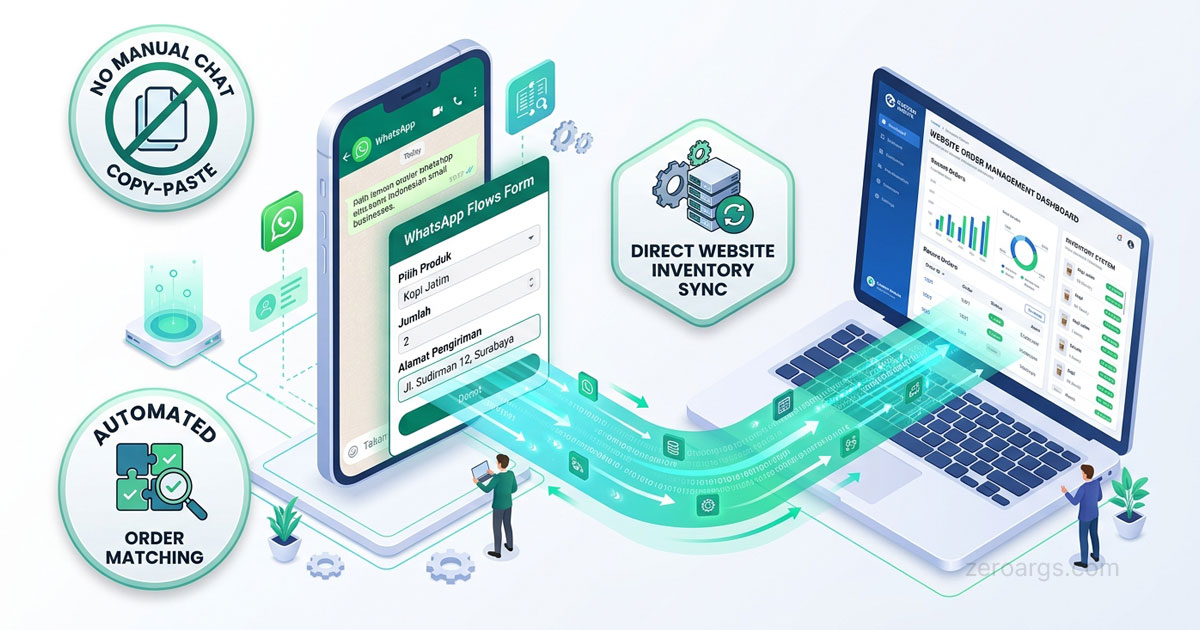
- After a customer scans the QR or submits the form, route them to WhatsApp Business with a contact label
marketplace_migrated. - A WhatsApp catalog can hold repeat-order products without requiring a website visit first—still log the transaction in your system.
5. Incentive Architecture That Does Not Destroy Margin
Migration incentives must be attractive enough to switch channels without matching the marketplace cuts you are trying to avoid:
| Incentive | Effectiveness | Margin risk |
|---|---|---|
| 30% website discount | High initially | Thin margin, hard to raise prices later |
| Free shipping on repeat orders | High, feels concrete | Predictable logistics cost |
| Early access to new products | Moderate, strong for loyal brands | Low |
| Member points per website transaction | Moderate, long-term effect | Low |
| Exclusive bundles (not on marketplace) | High for specific SKUs | Low if bundle margin is healthy |
Our principle: website incentives should be better than marketplace, not cheaper than marketplace. Customers switch for a more personal experience—not because you lose money on every transaction.
A practical example for a food MSME in Nganjuk: first-time Shopee buyers receive an insert card with a QR to a weekly pre-order page on the website—products not listed on the marketplace because of short shelf life.
6. Technical Flows: Events, Webhooks, and Migration Tracking
When checkout happens on your website, the system should record whether the customer came through the migration funnel. A minimal flow:
- Migration landing page — form submit or QR scan → save a
leadwithsource=packaging_qrand phone number. - Website checkout — match phone number to the lead; if matched, mark
migrated=true. order.paidwebhook — trigger WhatsApp confirmation + update customer profile (second_channel=website).- Simple dashboard — show migration rate:
(customers with a website transaction / total marketplace customers) × 100.
Example event logic you can implement in a backend:
// Pseudocode: detect migration at checkout
async function onOrderPaid(order: Order) {
  const existing = await db.customers.findByPhone(order.phone);
  if (existing?.first_channel !== "website" && !existing?.migrated_at) {
    await db.customers.update(existing.id, {
      migrated_at: new Date(),
      second_channel: "website",
      migration_source: order.utm_source ?? "direct",
    });
  }
}
You do not need enterprise ERP. A spreadsheet with tracking columns plus webhooks from payment gateway integration is enough for an MVP. Omnichannel inventory sync comes after repeat order volume on your website is consistent.
7. UU PDP and Consent When Collecting Marketplace Buyer Data
Collecting marketplace buyer phone numbers for marketing is not a gray area—it is governed by Indonesia's Personal Data Protection Law (UU PDP). Practices we recommend:
- State the purpose when asking for a number: "For order updates and website member promotions."
- Separate opt-in checkbox from shipping terms—do not bundle with "I agree to receive the package."
- Provide an opt-out path — reply "STOP" on WhatsApp or a link in email footers.
- Do not buy databases from third parties claiming marketplace buyer data.
A basic privacy page on your website—even for an MVP—shows serious intent and protects you during audits. More detail is in our practical UU PDP guide for web apps.
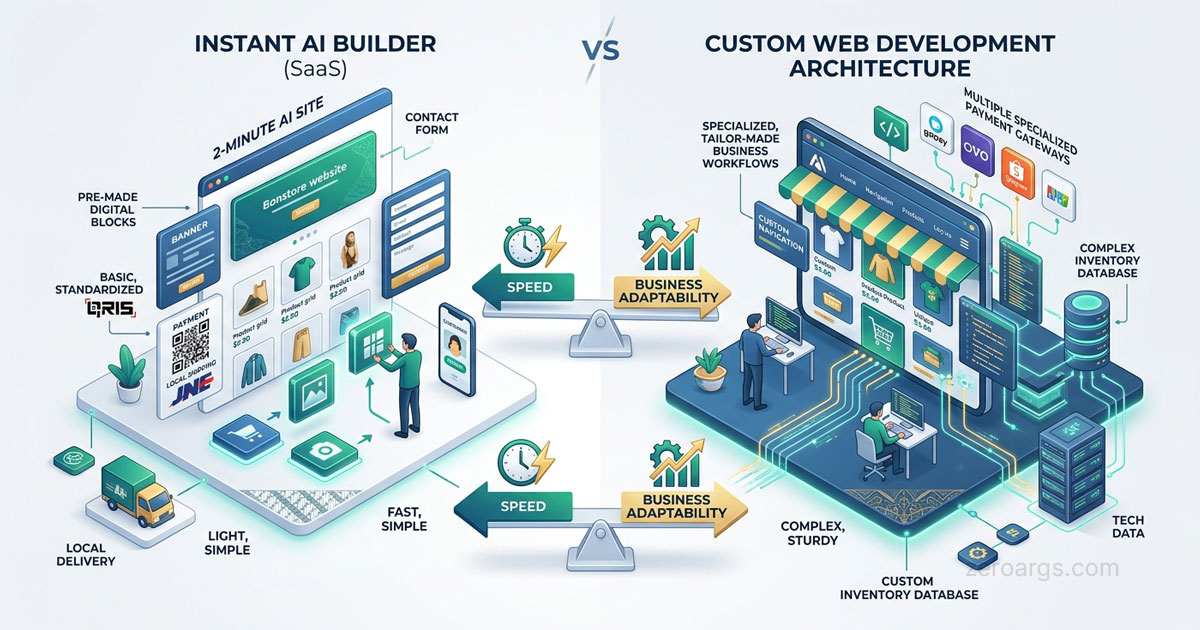
8. Build vs Buy: SaaS Omnichannel vs Custom Website Hub
Platforms such as Mekari Desty, BigSeller, or Desty offer ready-made omnichannel dashboards. A custom website as hub gives more control. A quick comparison:
| Aspect | SaaS omnichannel | Custom website hub |
|---|---|---|
| Time to launch | 1–2 weeks | 4–8 weeks MVP |
| Monthly cost | IDR 200k–2M+ | Hosting + maintenance |
| Migration funnel | Limited (operations focus) | Fully flexible |
| First-party data | Partially with vendor | 100% yours |
| Unique integrations | Platform templates | Tailored to your business |
For SMEs with 50–200 orders per month, SaaS is often enough for stock sync. When migration funnels and member pricing become differentiators, a custom website hub—even a simple one—offers control SaaS cannot match. Our low-code vs custom development guide helps identify the transition point.
Conclusion
A marketplace-to-website customer migration funnel is an operational project, not a pure technology project. Start with repeat-order SKUs, packaging touchpoints, and a clean phone-based data model—not a total migration that risks revenue. Marketplaces stay the acquisition engine; your website carries transactions with healthier margins and data you actually own.
Metrics worth tracking early: monthly migration rate, repeat order channel mix, and transaction cost per channel. If migration rate exceeds 5% after three months, your funnel is working.
Need help building a migration landing page, checkout webhooks, or WhatsApp integration for your business website? Start a conversation—at Zero Args Technology we help SMEs in Nganjuk and across Indonesia design funnels that are realistic for small teams.
Frequently asked questions
Do Indonesian SMEs need to close their marketplace store to migrate customers to a website?
No. A healthy migration funnel runs marketplace and website in parallel—marketplace for the first transaction, website for repeat orders—not a risky total migration that can wipe out revenue.
How do you collect customer data from marketplace buyers?
Use packaging inserts with QR codes, post-delivery follow-up messages, and landing pages with WhatsApp opt-in. Store normalized phone numbers as the primary identity, with consent under Indonesia's Personal Data Protection Law (UU PDP).
What incentives effectively shift buyers to a website?
Website-only member discounts, free shipping on repeat orders, early access to new products, or bundles unavailable on marketplace listings—not deep price cuts that destroy margin.
What metrics show the migration funnel is working?
Track migration rate (share of marketplace buyers who complete a second transaction on your website), repeat order channel mix, and transaction cost per channel—not just total revenue.