- umkm
- e-commerce
- engineering
- mvp
Smart Packaging QR Code Guide for Indonesian SMEs
Technical guide to smart packaging with QR codes for Indonesian SMEs—landing page architecture, dynamic QR, website and QRIS integration, and conversion tracking from physical packaging.

Smart packaging with QR codes turns SME product packaging from a physical wrapper into a digital entry point. In 2026, UMKM digitalization programs funded through Indonesia's BIMA Kemendiktisaintek grants and similar regional initiatives show a consistent pattern: craft, food, and agricultural products connect QR codes on packaging to landing pages, catalogs, and website checkout. This article covers how to build that system technically—not just sticking a QR on a box, but designing a measurable scan-to-action flow.
If you are already considering a marketplace-to-website customer migration funnel, smart packaging is the most effective physical touchpoint for collecting first-party data. Here we focus on technical architecture: landing pages, QR types, payment integration, and analytics.
1. Why Smart Packaging Is Trending for Indonesian SMEs in 2026
Several demand signals make smart packaging more than a marketing gimmick:
- Packaging is media you already pay for — every parcel shipped to marketplace or offline customers already carries your logo and brand name. A QR code adds function without extra ad spend per impression.
- Structured mentoring programs — universities and government bodies are integrating smart packaging into community service (PKM) and BIMA curricula, giving SMEs across regions—including East Java—access to digital packaging design training.
- Consumers already scan daily — QRIS adoption has made QR scanning a routine habit in Indonesia, not a novelty.
- Customer data locked in marketplaces — QR on packaging is one of the few legal ways to direct buyers to a channel where you own the data.
For owners of food, craft, or agricultural products in Nganjuk, Kediri, or other cities, smart packaging does not require a large IT team. What you need is a design decision: what happens after the customer scans?
2. Physical Packaging as an Owned Digital Touchpoint
Marketplaces, Instagram, and TikTok Shop are channels you rent. Packaging is an asset you fully control—every parcel is physical advertising that reaches the customer's hands.
Smart packaging's role in the channel ecosystem:
| Touchpoint | Primary function | Data you own |
|---|---|---|
| Marketplace (Shopee, Tokopedia) | Discovery and first transaction | Limited, platform-owned |
| Social media | Awareness and engagement | Platform analytics |
| Packaging + QR | Post-purchase, repeat order, brand story | Scan count, landing page behavior |
| Own website | Checkout, membership, full catalog | Full first-party |
A common mistake: QR codes pointing to an Instagram profile or generic marketplace link. A stronger strategy: direct to your landing page that can be updated without reprinting packaging—seasonal promos, new products, or WhatsApp opt-in forms.
Recommended flow for physical-product SMEs:
- Customer receives parcel → scans QR on label or insert card.
- Landing page shows: brand profile, production process video, related product catalog.
- Primary CTA: "Buy again on our website" or "Join our WhatsApp member group."
- Optional: QRIS pay button for quick repeat orders.
3. Scan-to-Action Landing Page Architecture
Smart packaging landing pages must be lightweight, mobile-first, and fast on rural 4G networks. Minimum structure we use:
Header: logo, brand name, one-line value proposition.
Main content: photo of purchased product (if QR is per-SKU), storage instructions, certifications (BPOM, halal BPJPH if relevant).
Social proof: short testimonial or rating.
CTA block: button to website checkout, WhatsApp, or marketplace as fallback.
Footer: address, contact, privacy policy link per Indonesia's Personal Data Protection Law (UU PDP).
Example clean URL structure:
https://yourbrand.id/scan/spicy-chips
https://yourbrand.id/scan?sku=KP-001&utm_source=packaging
Ensure the page:
- Loads under 3 seconds (see our Core Web Vitals guide).
- Is responsive at 360px width.
- Requires no login for basic information.
- Has Open Graph meta tags for share previews.
If you do not have a full website yet, start with one static page on a subdomain (scan.yourbrand.id) then upgrade to a full catalog. MVP principle: one QR, one clear goal, one primary metric.
4. Static vs Dynamic QR Codes: When to Use Each
| Aspect | Static QR | Dynamic QR |
|---|---|---|
| Destination URL | Fixed; cannot change after print | Editable from dashboard without reprint |
| Scan tracking | Only via UTM in Analytics | Built-in scan count dashboard |
| Cost | Free (online generators) | Free to paid (Bitly, QR Tiger, etc.) |
| Risk | Dead URL = dead QR | Provider downtime = temporary failure |
| Best for | Stable SKUs, small batches | Seasonal campaigns, CTA A/B tests |
Practical recommendations:
- SMEs with 1–5 SKUs and small packaging batches: static QR + UTM is sufficient.
- Brands with monthly promo rotation or multi-SKU lines: dynamic QR per product or batch.
- Always keep master QR files in vector format (SVG/EPS) for sharp printing on small labels.
Generate QR with error correction level Q or H if packaging may get dirty or partially covered. Minimum size on packaging: 2×2 cm for comfortable scan distance.
5. Integration with Website, WhatsApp, and QRIS
Smart packaging delivers the most value when a scan leads to a transactional action, not just a digital brochure.
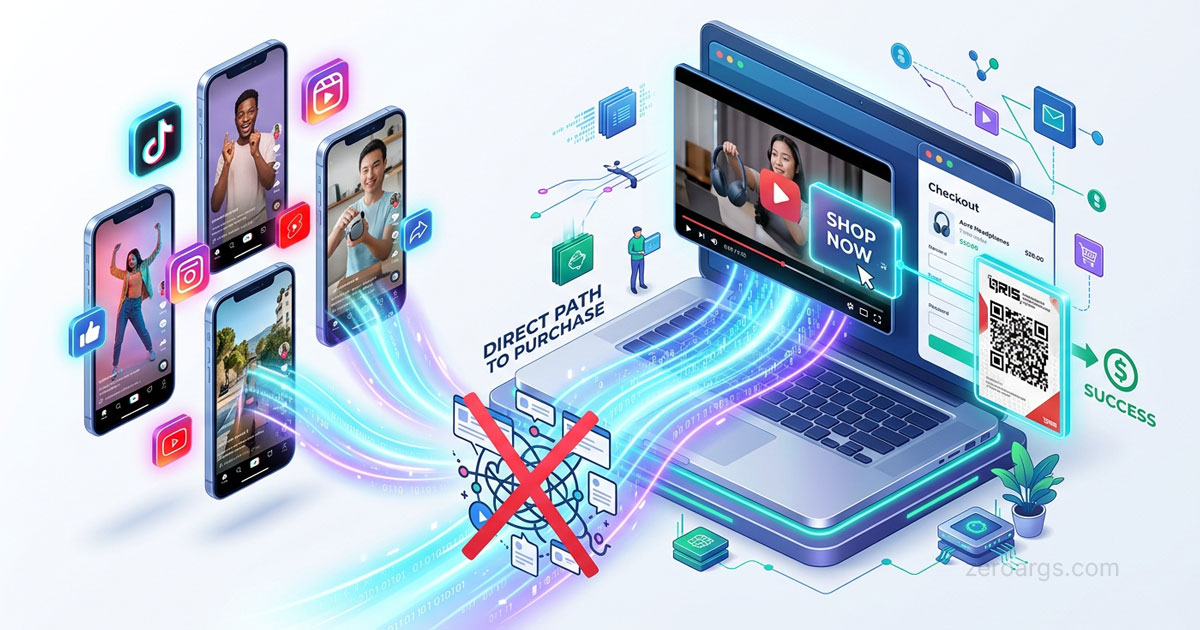
Website + payment gateway: Landing page with "Buy Now" button to product page on your site. Checkout supports QRIS, virtual accounts, and e-wallets via Midtrans or Xendit—the same pattern as payment gateway integration.
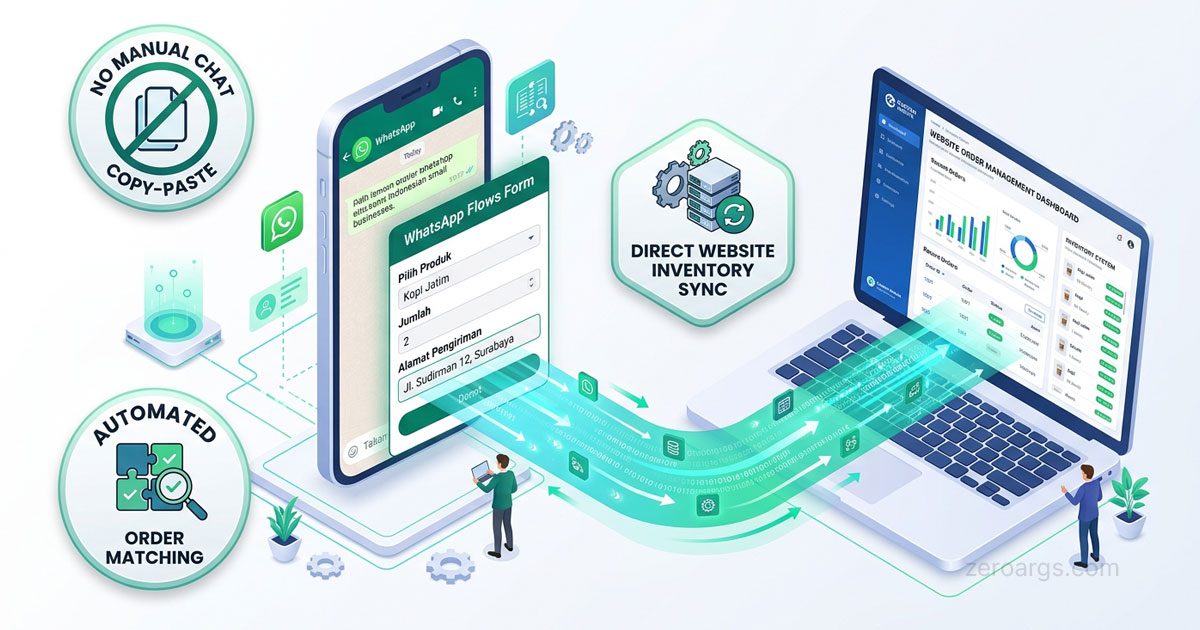
WhatsApp Business: "Chat to reorder" CTA with pre-filled message including SKU. Fits SMEs still processing orders manually. Integrate with WhatsApp Business API as volume grows.
QRIS directly on landing page: For fixed-price repeat orders (e.g., chips at Rp25,000), display session-generated dynamic QRIS. This speeds conversion without full checkout—useful for local FMCG products.
Marketplace as fallback: Links to Shopee/Tokopedia stores are acceptable but should be secondary. The goal of smart packaging is reducing dependency, not sending customers back to platforms.
6. Attribution and Analytics: UTM and Event Tracking
Without measurement, smart packaging is decoration. Minimum setup:
UTM parameters on destination URL:
?utm_source=packaging&utm_medium=qr&utm_campaign=chips-batch-0926
Google Analytics 4 events:
qr_scan— page view on/scan/*pathscta_click— buy/chat button clickspurchase— checkout conversion (if connected)
Simple dashboard (spreadsheet or Notion):
| Metric | How to measure | Initial target |
|---|---|---|
| Scan rate | scans ÷ units sold | 5–15% |
| Landing bounce rate | GA4 | < 60% |
| CTA click rate | events ÷ scans | > 20% |
| Repeat order (30 days) | CRM/sheet | 3–8% |
Correlating scans with repeat orders takes time. Compare cohorts of buyers who received QR packaging versus no QR over 60 days. If migration rate rises, packaging design investment pays off.
7. 30-Day Technical Implementation Checklist
Week 1 — Design and content
- Define one primary CTA per QR (reorder / WhatsApp / catalog).
- Prepare landing page copy: headline, 3 benefit bullets, 1 testimonial.
- Design label/insert card with QR in clean high-contrast area.
- Verify product certifications to display (halal, BPOM).
Week 2 — Build landing page
- Deploy page on website or static host (Vercel, Netlify).
- Test on 3 Android devices and 1 iPhone.
- Install SSL (HTTPS required).
- Add brief privacy policy if collecting data.
Week 3 — Integration and tracking
- Set up UTM and GA4 events.
- Connect CTA to checkout or WhatsApp.
- End-to-end test: scan → landing → checkout/QRIS → confirmation.
- Prepare master QR file for printing.
Week 4 — Pilot and iterate
- Print small batch (50–100 units) for testing.
- Monitor scan rate in first week.
- Collect customer feedback (is QR visible? is page clear?).
- Iterate CTA or copy based on data.
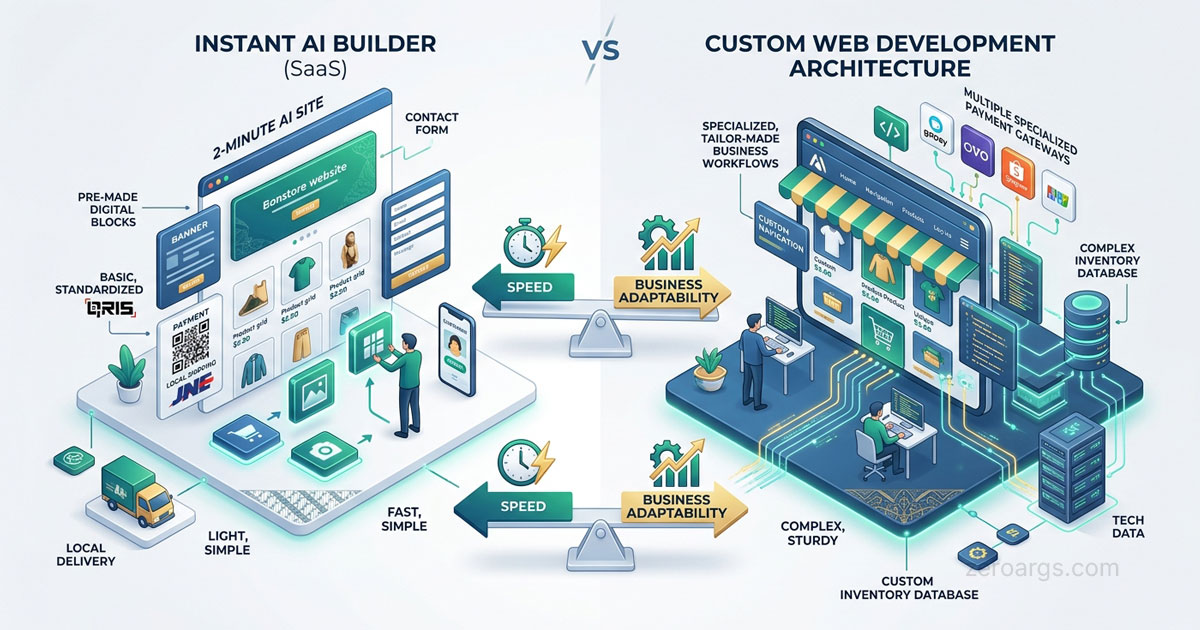
8. Comparison: Template vs Custom vs Hybrid
| Approach | Upfront cost | Launch time | Flexibility | Best for |
|---|---|---|---|---|
| Canva QR + WA link | Rp0–50K | 1–3 days | Low | Concept test, small batch |
| Landing template (Carrd, Notion) | Rp0–200K/mo | 3–7 days | Medium | 1–3 SKUs, simple promos |
| Existing site + /scan page | Rp500K–2M (dev) | 1–2 weeks | High | Brands with active website |
| Custom stack (Next.js + analytics) | Rp3–8M | 2–4 weeks | Very high | Multi-SKU, POS/CRM integration |
The build-vs-buy decision depends on whether smart packaging is a one-time experiment or part of a long-term owned-channel strategy. For most SMEs, hybrid—a landing page on an existing site with dynamic QR—delivers the best ROI.
Conclusion
Smart packaging with QR codes is not just a packaging trend; it is infrastructure connecting physical products to the digital ecosystem you own. Start with one SKU, one landing page, and one scan-rate metric. Scale to dynamic QR, checkout integration, and analytics when data proves conversion.
If you want to design a scan-to-action landing page or integrate smart packaging into your business website, start a conversation with us. We help SMEs in Nganjuk and across Indonesia build measurable systems—not just QR stickers on boxes.
Frequently asked questions
What is smart packaging for SMEs?
Smart packaging is product packaging equipped with a QR code or other digital element so customers can access product information, catalogs, or checkout pages by scanning the code with their phone.
How much does smart packaging with QR codes cost?
Static QR codes are free to generate. Main costs are packaging design, a website landing page, and optional paid dynamic QR services starting around tens of thousands of rupiah per month—far cheaper than repeated ad photoshoots.
Does smart packaging need to link to your own website?
Not required, but your own website gives full control over data, branding, and checkout. A simple landing page or WhatsApp Business link works as a starting point before upgrading to a full site with a payment gateway.
How do you track how many people scan the QR on packaging?
Use dynamic QR with a short URL that logs scans, or static QR with UTM parameters on the destination URL. Connect to Google Analytics 4 to see packaging-sourced traffic.