- e-commerce
- umkm
- mvp
- engineering
Subscription Commerce for Indonesian SMBs: Recurring Revenue
Subscription commerce for Indonesian SMBs: recurring billing models, QRIS payment integration, MRR metrics, and a 30-day website MVP roadmap.

Subscription commerce for Indonesian SMBs is no longer a buzzword reserved for SaaS startups in Jakarta. In 2026, food businesses, laundry services, skincare brands, and cleaning companies are selling monthly packages because marketplace margins keep shrinking and one-off transactions produce cash flow that is too unpredictable. What separates businesses that succeed from those that stall is not the subscription idea itself — it is whether you have a system: a website that explains your plans, reliable recurring payments, and customer data that does not disappear inside WhatsApp threads.
This article outlines how to build recurring revenue with an engineering-first mindset: realistic models for SMB scale, a local payment stack, and an MVP roadmap you can test in 30 days without building a global subscription platform from scratch.
1. Why Subscription Commerce Is Rising in Indonesia in 2026
Three forces are driving the trend:
Sales-channel margin pressure. Marketplace admin fees, algorithm-driven ads, and live-commerce commissions keep eroding profit. Many SMBs are not leaving Tokopedia or Shopee entirely — they add an owned channel for customers who already trust them, where margins are clearer. We cover that hybrid pattern in why Indonesian SMEs still need a website beyond marketplaces.
Customers already understand subscriptions. Gallon water delivery, coffee subscriptions, office lunch packages, and gym memberships have existed in Indonesia for decades — they just were not branded as "subscription commerce." Your buyers do not need education from zero; they need a clear flow and frictionless payment.
Digital payment infrastructure is mature. QRIS, virtual accounts, e-wallets (GoPay, OVO, DANA, ShopeePay), and providers like Midtrans or Xendit make recurring payment links viable without placing a card terminal at every customer's home.
Search intent here is a mix of informational and commercial-investigation: you are evaluating whether a subscription model fits while estimating what you need to build.
2. Subscription Models That Fit SMBs (Beyond SaaS)
Subscription commerce has three dominant patterns. Pick the one closest to how you operate today:
| Pattern | SMB examples | Billing frequency | Operational complexity |
|---|---|---|---|
| Replenishment | Coffee, skincare, frozen meals | Monthly / biweekly | Predictable production & logistics |
| Curation | Snack boxes, flowers, gift hampers | Monthly | Curation + surprise value |
| Access / membership | Online classes, communities, priority service | Monthly / annual | Content or service slots |
Concrete examples we see across East Java and nearby regions:
- Daily catering — 20 working-day packages at a 10–15% discount vs daily orders.
- Laundry by weight — monthly kilogram quota with scheduled pickup.
- Skincare — serum refills every six weeks based on usage cycles.
- Cleaning services — four visits per month with fixed time slots.
What does not fit subscriptions: impulse products with no usage rhythm, margins too thin for bundle discounts, or production capacity you cannot forecast. If you sell out every time a TikTok Shop video goes viral, fix supply before selling a monthly commitment.
3. Technical Architecture: Website, Billing, and Recurring Payments
You do not need to rebuild Stripe Billing from scratch. A sustainable minimum architecture for Indonesian SMBs looks like this:
Website (plan catalog) → Backend (orders + subscriptions)
       ↓
Payment provider (Midtrans / Xendit) → webhook settlement
       ↓
Customer database + subscription status → WhatsApp / email notifications
The website is your marketing source of truth: plan pages, FAQ, cancellation terms, and a privacy policy aligned with Indonesia's Personal Data Protection Law (UU PDP). It is also an SEO asset for queries like "coffee subscription Jakarta" or "monthly laundry package Surabaya".
The backend stores: customer_id, plan_id, status (active / past_due / cancelled), next_billing_date, and payment history. Do not rely on spreadsheets after you pass roughly 30 active members.
The payment layer in Indonesia in 2026 is still more recurring invoicing than credit-card auto-debit. Each cycle, the system sends a new payment link or virtual account; customers complete payment within 24–48 hours. That differs from global SaaS that charges cards automatically — and it is normal for your market.
For one-time checkout, the technical foundation overlaps with payment gateway integration for Indonesian business websites. Subscriptions add scheduling and membership status on top of the same webhook pattern.
4. Choosing a Payment Stack: QRIS, VA, E-wallets, and Reminders
No single method wins every segment. Patterns that work:
| Method | When to use | Implementation note |
|---|---|---|
| Dynamic QRIS | Mobile-first customers paying each cycle | Handle link expiry gracefully |
| Virtual account | B2B, larger amounts, bank-transfer habits | BCA/BRI/Mandiri/BNI VA via Midtrans/Xendit |
| E-wallet | Younger demographics, small–mid ticket sizes | GoPay/OVO/DANA — watch MDR fees |
| WhatsApp payment link | Fallback for less technical buyers | Send links from your system, not manual account numbers |
Engineering principle: the webhook settlement event remains the source of truth for payment status. A "Thank you" page after redirect is not enough — the same rule as standard e-commerce checkout.
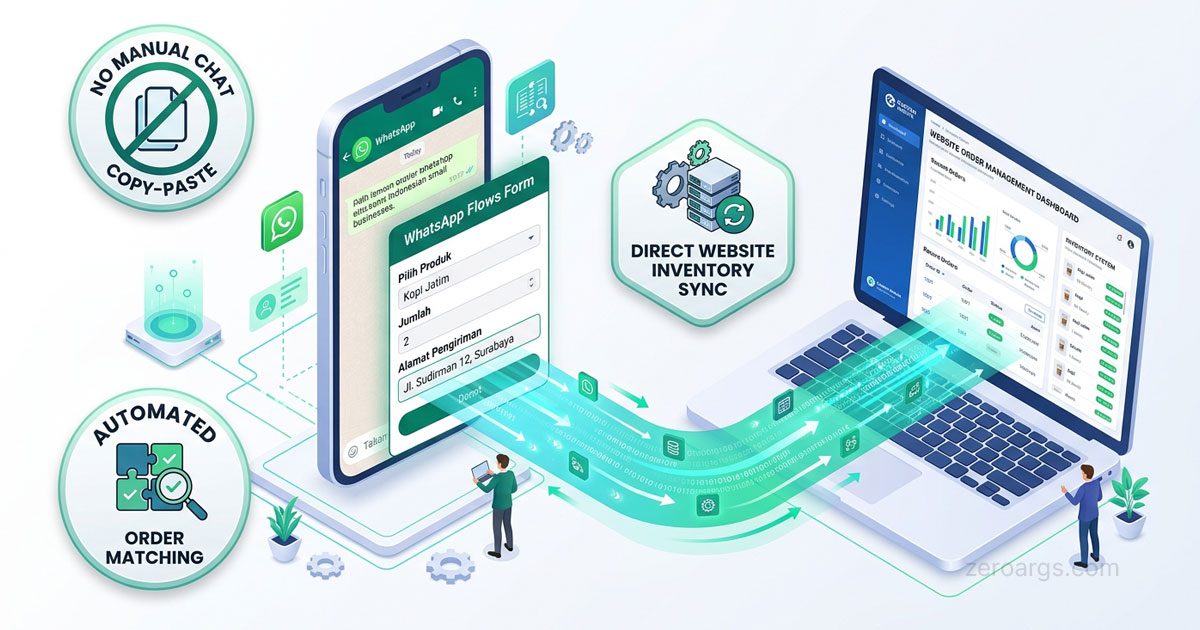
Reminders before operational churn: Send a WhatsApp template three days before billing (not spam): amount due, payment link, and delivery schedule confirmation. After two days past due without payment, mark status past_due and release production slots. Upfront transparency reduces complaints more than surprise discounts.
5. Metrics to Track From Day One
Subscriptions without numbers quickly become "subscriptions that create extra work." Four core metrics:
| Metric | How to calculate | Healthy early target |
|---|---|---|
| MRR | Total active subscription revenue per month | Month-over-month growth |
| Churn rate | Cancelled members ÷ total members last month | Below 5% per month |
| LTV | Avg revenue per member × avg active months | > 3× acquisition cost |
| CAC payback | Months until revenue covers member acquisition cost | Under 6 months |
Do not obsess over MRR in week one. Focus on cohort retention: of your first 20 members, how many pay again in month two? If below 70%, fix product and logistics before scaling ads.
For startups comparing business models, these metrics complement our unit economics guide for Indonesian startups — subscriptions change the shape of LTV; they do not remove the need to calculate margin per customer.
6. Pricing Structure: Tiers, Annual Discounts, and Trials
Three tiers (good–better–best) almost always outperform a single plan: customers self-select, and the middle tier often becomes the default. Catering example:
- Basic — 12 days, no snack.
- Standard — 20 days + snack.
- Premium — 20 days + snack + menu choice.
Annual discounts reduce churn because the psychological commitment is longer. A 10–15% discount for paying 12 months upfront is reasonable if your cash flow can support it.
Limited trials work when the product must be proven: "3-day trial" or "first week at half price" — not unlimited free shipping that destroys unit economics.
Show price per day or per serving on your website. "Rp 750,000/month" feels expensive until buyers see "Rp 37,000/lunch" — honest framing, not a trick.
7. Churn, Retention, and the Role of WhatsApp
In Indonesia, WhatsApp is not an optional marketing channel — it is where customers complain, reschedule, and decide whether to renew. Integrate with discipline:
- Onboarding — welcome message + first delivery schedule + support contact.
- Pre-billing — H-3 reminder with payment link (use approved templates if you go through the WhatsApp Business API).
- Win-back — one personal message after cancellation asking why (price, schedule, taste) — not five promotional blasts.
Healthy churn exists: customers move cities, change jobs, or offices close. Dangerous churn is silent — people stop paying without feedback because cancellation is hard. Make cancel one click in an account or reply "STOP" on WhatsApp with a clear confirmation; that also meets UU PDP privacy expectations.
Above roughly 100 active members, consider a shared inbox via API — foundations in our WhatsApp Business API integration guide.
8. MVP Roadmap: 30 Days to Your First Subscription
Do not wait for a mobile app. Four realistic weeks:
| Week | Deliverable | Validation |
|---|---|---|
| 1 | Landing page with 3 plans + interest form + Google Sheet | 10 people say "yes" at the listed price |
| 2 | First checkout (payment link) + simple agreement | 5 payments received |
| 3 | Webhook + subscription status + manual WA reminders | No "forgot to bill" orders without status |
| 4 | Automated reminders + simple admin dashboard | Week-4 churn is measurable |
Build vs buy for MVP:
| Approach | Best when | Risk |
|---|---|---|
| Spreadsheet + payment link | < 20 members, concept test | Manual scale breaks |
| Shopify/WooCommerce + subscription plugin | Physical goods, non-technical team | Plugin cost + limited customization |
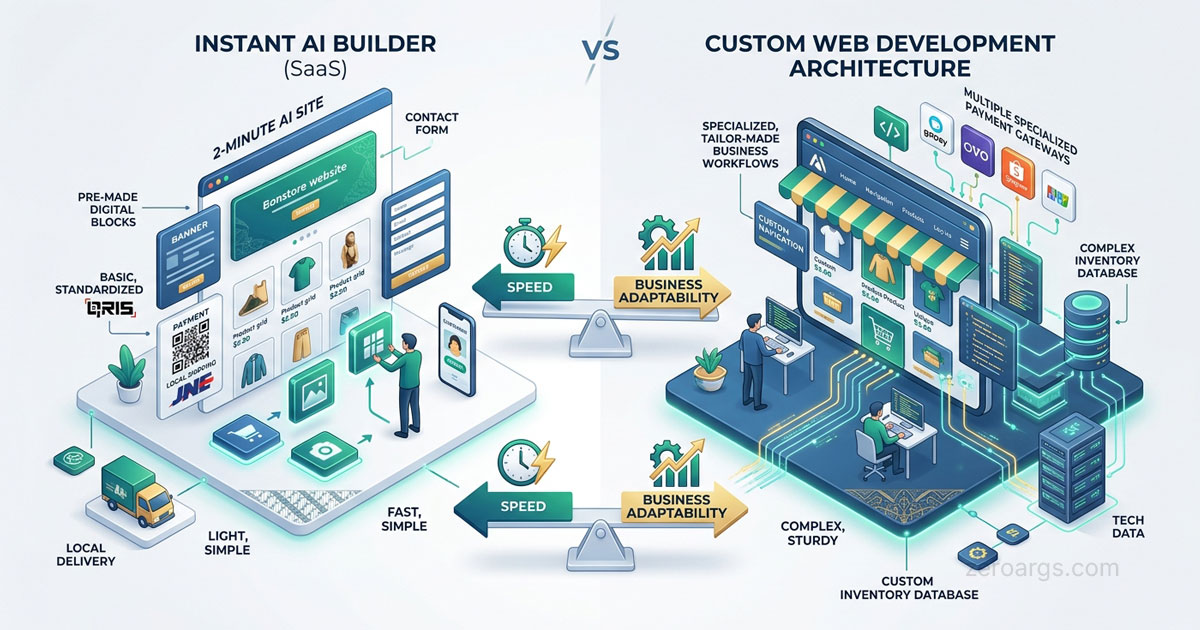
| Custom website + Midtrans/Xendit | Complex logistics, WhatsApp integration | Higher upfront investment |
We usually recommend lightweight custom builds when delivery schedules, capacity slots, or warehouse integration do not fit templates — the same decision frame as low-code vs custom development.
Conclusion
Subscription commerce for Indonesian SMBs wins when you treat it as an operating system — not a marketing label on your Instagram bio. Start with one plan your operations can actually fulfill, measure month-two cohort retention, and build an honest website plus recurring payments before chasing hundreds of members.
If you want to design a subscription MVP — from plan pages to webhooks and WhatsApp reminders — start a conversation with us. We help businesses in Nganjuk and across Indonesia build recurring revenue they can actually operate, not just present in a pitch deck.