- umkm
- e-commerce
- seo
- engineering
Harbolnas 2026 Brand Registration: Website Hub Guide for SMEs
Harbolnas 2026 brand registration for Indonesian SMEs: Kemendag requirements, digital assets, promo hubs on your own site, and marketplace sync before December 10–16.
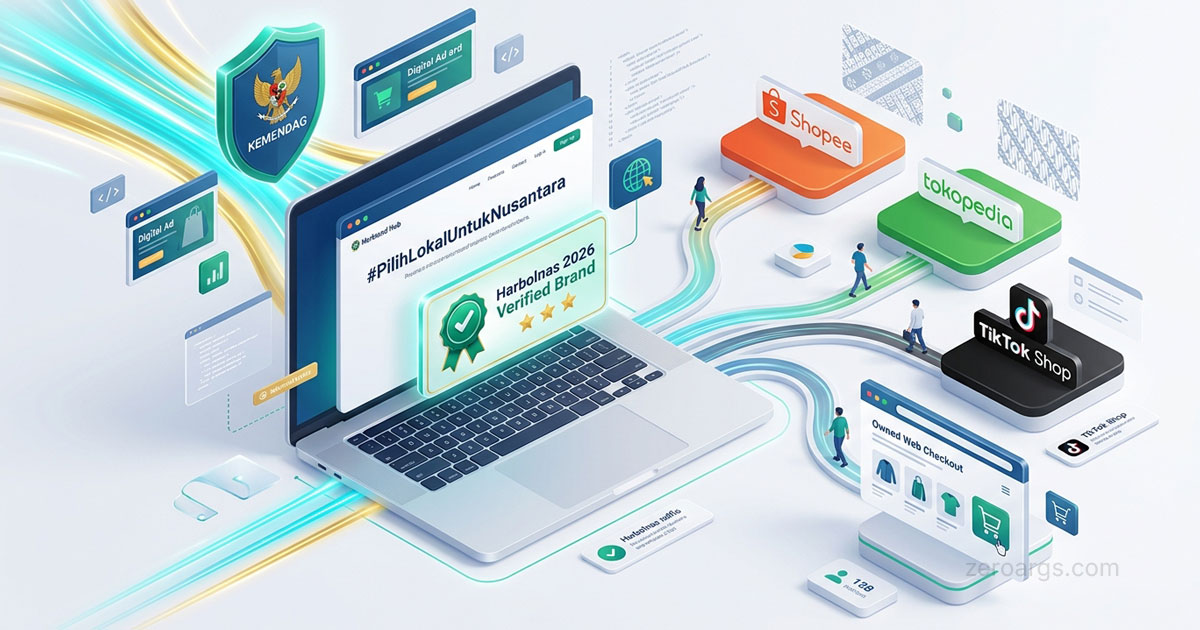
Harbolnas 2026 brand registration is not just filling out a Ministry of Trade form and waiting for an official logo to appear in your feed. A curated local brand slot unlocks national visibility, but revenue still lands in your stores—on Shopee, Tokopedia, TikTok Shop, or on a website you control. The Road to Harbolnas 2026 started at the August kick-off; the official shopping period runs December 10–16, 2026 under #PilihLokalUntukNusantara, with a national transaction target near IDR 40 trillion. In October, the brand registration window is narrowing; what separates SMEs that only “wear the banner” from those that grow GMV is consistent brand data and a promo hub ready for government campaigns, marketplace features, and paid traffic.
This article complements our Harbolnas 2026 website technical readiness guide. Here we focus on registration flow, digital asset packs, and landing-page structure on your domain—not server stress tests.
1. What “Local Brand” Means in Harbolnas 2026 — and Dates to Track
Harbolnas is Indonesia’s national online shopping program orchestrating marketplaces, OTAs, ride-hailing, and social commerce on one calendar. For SMEs, joining as a registered local brand puts your business name, category, and contacts into the official ecosystem—not only as an anonymous seller on one platform.
Practical timeline (verify against official announcements if dates shift):
| Milestone | Approximate timing | What it means for you |
|---|---|---|
| Road to Harbolnas workshops | Aug–Nov 2026 | Prepare NIB, product photos, website URL |
| Local brand registration | Open until ~week 2 of Nov 2026 | Submit assets before the window closes |
| Pre-event campaigns | November 2026 | Live /harbolnas landing, UTMs ready |
| Peak period | Dec 10–16, 2026 | Omnichannel promos + synced stock |
If you are starting in October, you still have roughly eight weeks before peak—enough for a simple brand hub if you do not delay product photography and basic legal IDs.
2. Administrative Requirements Before You Submit the Form
Registration forms typically ask for legal identity and operational contacts. Small mismatches—brand name differs from NIB, or wrong category—often trigger re-review.
Administrative checklist:
- Active NIB with a trade name aligned to the brand you register.
- Business tax ID (NPWP) when required for verification or certain programs.
- Official contact email on your domain (
[email protected]) rather than a free mailbox. - WhatsApp Business number with verified profile and stated hours.
- Consistent category across marketplaces and website (avoid “fashion” in one place and “electronics” elsewhere).
For regulated goods, keep BPOM, halal (BPJPH), or SNI references ready—even when not mandatory on the form, curators often request proof for food, cosmetics, or children’s products.
3. Digital Asset Pack to Prepare Before You Apply
Curation moves faster when assets are “plug-and-play.” Keep a folder (Drive or internal repo) with:
- Logo PNG with transparency and SVG if available; horizontal version for web banners.
- Product or service photos — at least 2000×2000 px for goods; for services, process or outcome shots with minimal overlay text.
- Brand story (150–300 words): local sourcing, production capacity, shipping regions.
- Stable URLs: homepage plus promo page (
/harbolnasor/december-promo). - Active marketplace links with ratings and stocked listings (empty shops reduce curator trust).
Use our Gemini product photography guide if you need visual quality without a studio—but do not replace real product photos with misleading AI renders.
4. Building a Harbolnas Hub Page on Your Own Website
Your site does not replace marketplaces during Harbolnas, but it becomes the campaign source of truth: one URL for Meta ads, Google ads, and packaging QR codes.
Minimum structure for /harbolnas:
- Hero — #PilihLokalUntukNusantara, promo dates, primary CTA (“Buy on website” / “Chat on WhatsApp”).
- Curated SKUs — six to twelve heroes, not the full catalog; each card shows Harbolnas price, stock, and checkout.
- Reason to buy direct — local free shipping, sample bonus, or warranty that does not fit marketplace templates.
- Trust — reviews, certificates, or embedded Maps for physical stores in Nganjuk, Surabaya, or your operating city.
- FAQ — shipping (JNE, J&T, SiCepat), SLA estimates, return policy.
Tag every promo button with UTM parameters so you know whether Kemendag activations, influencers, or email drove conversions. Example:
https://yourbrand.com/harbolnas?utm_source=instagram&utm_medium=social&utm_campaign=harbolnas2026
Add Product schema on promo SKUs for seasonal rich results—performance basics align with our Core Web Vitals guide for Indonesian business websites.
5. Omnichannel After Approval: Marketplace, Social, and Owned Checkout
Registered brands still sell where you already have traction. A pattern that works for East Java SMEs:
- Marketplaces for discovery and platform discounts—use incentives such as Sapa UMKM when you pass curation.
- Website + QRIS for repeat buyers and larger baskets—especially after zero MDR QRIS improves margin.
- WhatsApp for manual confirmation when stock is thin—wire WhatsApp Flows when chat volume spikes.
Price and stock sync is non-negotiable. Use an ops spreadsheet or POS integration if you run hybrid retail; never update Harbolnas pricing on only one channel.
6. Extra Prep for Services, Digital Goods, and Non-Physical Offers
Harbolnas 2026 expands to accommodation, transport, and digital services—aligned with marketplace rules discussed in our Permendag 19/2026 overview. Service sites need different elements than physical shops:
- Tiered packages (Basic/Pro) with duration and deliverables spelled out.
- Booking calendar or form with automated email/WhatsApp confirmation.
- Cancellation and deposit policy visible upfront—reduces disputes during demand spikes.
- Virtual account or QRIS for deposits; avoid manual transfers with no system record.
For events or online courses, add short terms and PDP-aligned consent checkboxes—registration forms that collect names and phone numbers are personal-data processing under Indonesia’s Personal Data Protection Law (UU PDP).
7. A 60-Day Post-Approval Plan (October–December)
Treat approval as operational day zero, not the finish line.
| Week | Brand & website focus | Operations focus |
|---|---|---|
| 1–2 | Publish /harbolnas, test checkout | Audit stock and merchant payment limits |
| 3–4 | Pre-event content (video, email to past buyers) | CS briefing and reply templates |
| 5–6 | Paid ads with UTMs | Light stress testing (see technical guide) |
| 7–8 | Freeze major site changes | Incident runbook and daily backups |
After the campaign, route new buyers into a marketplace-to-website migration funnel so Harbolnas discounts are not a one-off transaction.
8. Comparison: Marketplace-Only vs Registered Brand + Website Hub
| Aspect | Marketplace-only | Registered brand + website hub |
|---|---|---|
| National program exposure | Store algorithm dependent | Brand in official ecosystem |
| Campaign URL | Platform shop link | Owned domain + measurable UTMs |
| Peak-season margin | Platform fees + promos | More control on owned checkout |
| Customer data | Siloed per platform | Email/WA opt-in on your site |
| Spike risk | Platform checkout queues | Backup channel if one platform slows |
Conclusion
Harbolnas 2026 brand registration works best when legal paperwork, polished visuals, and a promo hub on your own website are ready before November’s deadline closes. Registration opens the door to exposure; GMV depends on consistent pricing, stock, and checkout across every channel—plus the infrastructure checks we document in the technical Harbolnas guide. Start with an asset folder and one promo landing; iterate weekly until December 10.
If you want a second opinion on whether your brand hub is Harbolnas-ready without rebuilding from scratch, start a conversation with Zero Args Technology—we help SMEs in Nganjuk and across Indonesia design promo hubs tied to payment gateways and daily operations.
Frequently asked questions
When does Harbolnas 2026 brand registration close?
Local brand registration for Harbolnas 2026 typically closes around the second week of November 2026. Confirm the exact date on official Ministry of Trade channels before you submit assets.
Do SMEs need a website to register for Harbolnas?
Not always required on the form, but a stable brand hub URL speeds curation, supports the #PilihLokalUntukNusantara campaign, and gives you a backup checkout path when marketplaces are congested.
How is Harbolnas prep different on marketplaces vs your own website?
Marketplaces control in-platform banners and discounts. Your site hosts promo landings, paid-ad UTMs, packaging QR codes, and QRIS checkout with more margin control—both must use the same product data.
Are services included in Harbolnas 2026?
Yes. The 2026 edition expands to digital services, accommodation, and transport alongside physical goods. Service pages need clear packages, SLAs, and booking proof.